Types of rooms in a 5 star hotel, explained: standard, deluxe, executive, and suites, plus bed types and views, and how much each tier really costs.





The rooms in a five star hotel are organised into tiers, from a standard room up through deluxe, executive, and a range of suites, each adding more space, a better view, and higher service. Understanding the ladder helps you know exactly what you are paying for before you book.
The names can be confusing, because hotels use different labels for similar rooms and mix three separate ideas: the room's tier, its bed setup, and its view or layout. This guide untangles all three, tier by tier, so you can pick the right room with confidence.
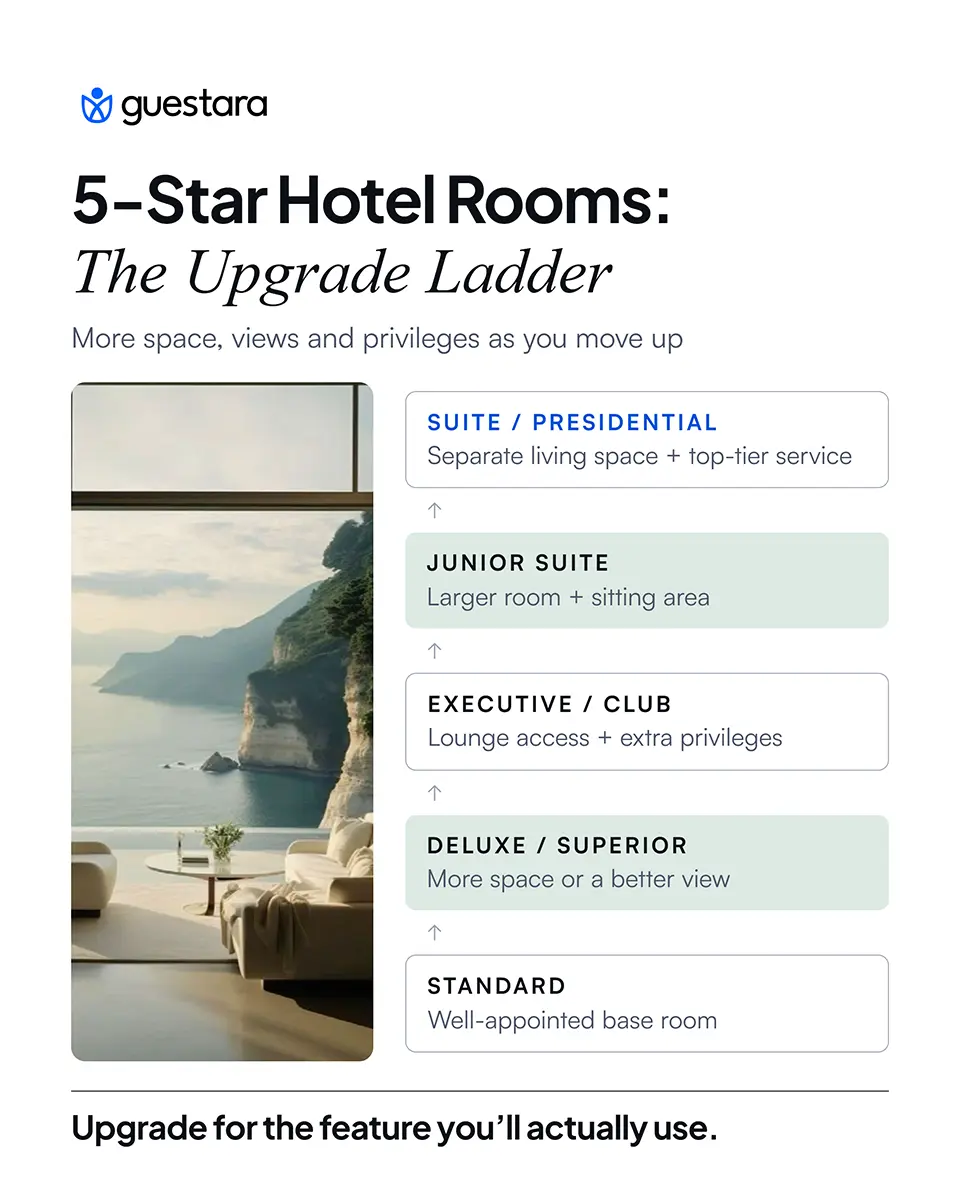
A five star hotel typically offers a ladder of room types: standard or classic rooms at the base, then deluxe and superior rooms, executive or club rooms, and finally suites up to the presidential suite. Each step up adds space, a better view or location, and more service. Standard rooms in a five star hotel are already generous, often starting around 400 square feet, before suites push far beyond that.
Here is the usual hierarchy, from entry level to top tier.
Below the suites, five star hotels use a handful of core room categories. The labels vary between brands, but the ladder is consistent.
A suite is a room with a separate living area, and five star hotels offer several, rising in size and exclusivity. The defining feature is space beyond the bedroom, often with extras like a dining area, a pantry, or a private terrace.
Beyond tier, five star rooms are described by two more things: the bed setup and the view or layout. A single room name often combines all three, like Deluxe King Sea View, which is why the labels get confusing.
By bed type, rooms are usually single, double or queen, twin, or king, and some offer a hollywood twin, two singles that join into a king. By view and layout, you will see sea or ocean view, city view, garden view, and pool view, along with connecting rooms for families, accessible rooms designed for guests with disabilities, and cabana or poolside rooms at resorts.
Book the lowest tier that meets your needs, then pay up only for the feature you will actually use, whether that is space, a view, or lounge access. A standard room is plenty for a short city stay, while a suite or club room earns its price on a longer or special-occasion trip.
Price rises steeply up the ladder. US luxury hotel rates averaged about 352 dollars a night in 2025, more than double the roughly 161 dollar overall hotel average, and suites often cost two to four times a standard room in the same property. A deluxe upgrade may add only a modest amount for a much better view, which is often the best-value step up.
In India, five star hotels use the same ladder, and heritage palace hotels add categories like palace rooms and royal suites. Club and executive rooms are popular with business travelers for the lounge and breakfast included.
For hoteliers, room types are a pricing and revenue tool, not just labels. A clear ladder lets you capture more value by giving guests a reason to trade up, and the gap between tiers is where upgrade revenue lives. Many revenue-forward hotels are now moving to attribute-based selling, pricing individual features like floor, view, and bed setup separately rather than bundling them into a few fixed room names.
Whichever model you use, the upside comes from offering the right upgrade at the right moment. Guestara's Upsell menu lets guests see and buy a room upgrade before or during the stay, turning your room ladder into added revenue.
[[cta:cta-5 | eyebrow= ROOM UPGRADES | heading=Turn your room tiers into upgrade revenue on every stay. | btn=Explore Upsells | link=https://www.guestara.com/hotel-upsell-software ]]


Types of rooms in a 5 star hotel, explained: standard, deluxe, executive, and suites, plus bed types and views, and how much each tier really costs.
The rooms in a five star hotel are organised into tiers, from a standard room up through deluxe, executive, and a range of suites, each adding more space, a better view, and higher service. Understanding the ladder helps you know exactly what you are paying for before you book.
The names can be confusing, because hotels use different labels for similar rooms and mix three separate ideas: the room's tier, its bed setup, and its view or layout. This guide untangles all three, tier by tier, so you can pick the right room with confidence.
A five star hotel typically offers a ladder of room types: standard or classic rooms at the base, then deluxe and superior rooms, executive or club rooms, and finally suites up to the presidential suite. Each step up adds space, a better view or location, and more service. Standard rooms in a five star hotel are already generous, often starting around 400 square feet, before suites push far beyond that.
Here is the usual hierarchy, from entry level to top tier.
Below the suites, five star hotels use a handful of core room categories. The labels vary between brands, but the ladder is consistent.
A suite is a room with a separate living area, and five star hotels offer several, rising in size and exclusivity. The defining feature is space beyond the bedroom, often with extras like a dining area, a pantry, or a private terrace.
Beyond tier, five star rooms are described by two more things: the bed setup and the view or layout. A single room name often combines all three, like Deluxe King Sea View, which is why the labels get confusing.
By bed type, rooms are usually single, double or queen, twin, or king, and some offer a hollywood twin, two singles that join into a king. By view and layout, you will see sea or ocean view, city view, garden view, and pool view, along with connecting rooms for families, accessible rooms designed for guests with disabilities, and cabana or poolside rooms at resorts.
Book the lowest tier that meets your needs, then pay up only for the feature you will actually use, whether that is space, a view, or lounge access. A standard room is plenty for a short city stay, while a suite or club room earns its price on a longer or special-occasion trip.
Price rises steeply up the ladder. US luxury hotel rates averaged about 352 dollars a night in 2025, more than double the roughly 161 dollar overall hotel average, and suites often cost two to four times a standard room in the same property. A deluxe upgrade may add only a modest amount for a much better view, which is often the best-value step up.
In India, five star hotels use the same ladder, and heritage palace hotels add categories like palace rooms and royal suites. Club and executive rooms are popular with business travelers for the lounge and breakfast included.
For hoteliers, room types are a pricing and revenue tool, not just labels. A clear ladder lets you capture more value by giving guests a reason to trade up, and the gap between tiers is where upgrade revenue lives. Many revenue-forward hotels are now moving to attribute-based selling, pricing individual features like floor, view, and bed setup separately rather than bundling them into a few fixed room names.
Whichever model you use, the upside comes from offering the right upgrade at the right moment. Guestara's Upsell menu lets guests see and buy a room upgrade before or during the stay, turning your room ladder into added revenue.
[[cta:cta-5 | eyebrow= ROOM UPGRADES | heading=Turn your room tiers into upgrade revenue on every stay. | btn=Explore Upsells | link=https://www.guestara.com/hotel-upsell-software ]]
The presidential suite is usually the highest room type, the largest and most exclusive in the hotel, with multiple rooms and top-tier service. Some resorts go higher still with private villas or penthouse suites that offer standalone space and dedicated staff.
A deluxe room is a single, more spacious room with a better view or location, while a suite adds a separate living area apart from the bedroom. A suite gives you distinct spaces to sleep and relax, which is why it costs more.
A junior suite is the entry-level suite, a larger room with a sitting area within the same open space rather than a separate living room. It suits couples or longer stays that want extra room without paying full suite prices.
A club or executive room is a deluxe room bundled with access to a private lounge, usually including breakfast, evening drinks, and dedicated check-in. It is popular with business and frequent travelers who value the lounge and included extras.
We work closely with the industry leaders to offer seamless solutions




We’re here to help your whole team stay ahead of the curve as you grow.

Get up and running quickly with a personalized onboarding plan

Connect with real people who really get it, 24/7

Checkout our vast library of free resources, templates and more
There's only so much we can say — so let us show you! Schedule a demo today and reach your business goals.



.png)