Resort vs hotel explained: a resort is a self contained destination, a hotel is a base for exploring. Compare cost, amenities, stay, and which to book.





The difference between a resort and a hotel comes down to one thing: whether the property is the destination or the doorway to it. A resort is built to hold your whole trip on site, from meals to activities. A hotel gives you a comfortable room and sends you out to explore the city or coast around it.
You have felt this without naming it. The beachfront place where you never touched your car keys for five days was a resort. The tidy room near the airport where you slept, showered, and left by nine was a hotel. Here is how the two really differ, what each costs, and how to pick the right one.
A hotel provides paid overnight accommodation, usually in a city or near a transport hub, for travelers who plan to spend most of their time off the property. A resort is a larger, self contained property, usually in a leisure destination, designed so guests can eat, relax, and find entertainment without leaving. The core split is purpose: a hotel is a place to stay, a resort is a place to stay put.
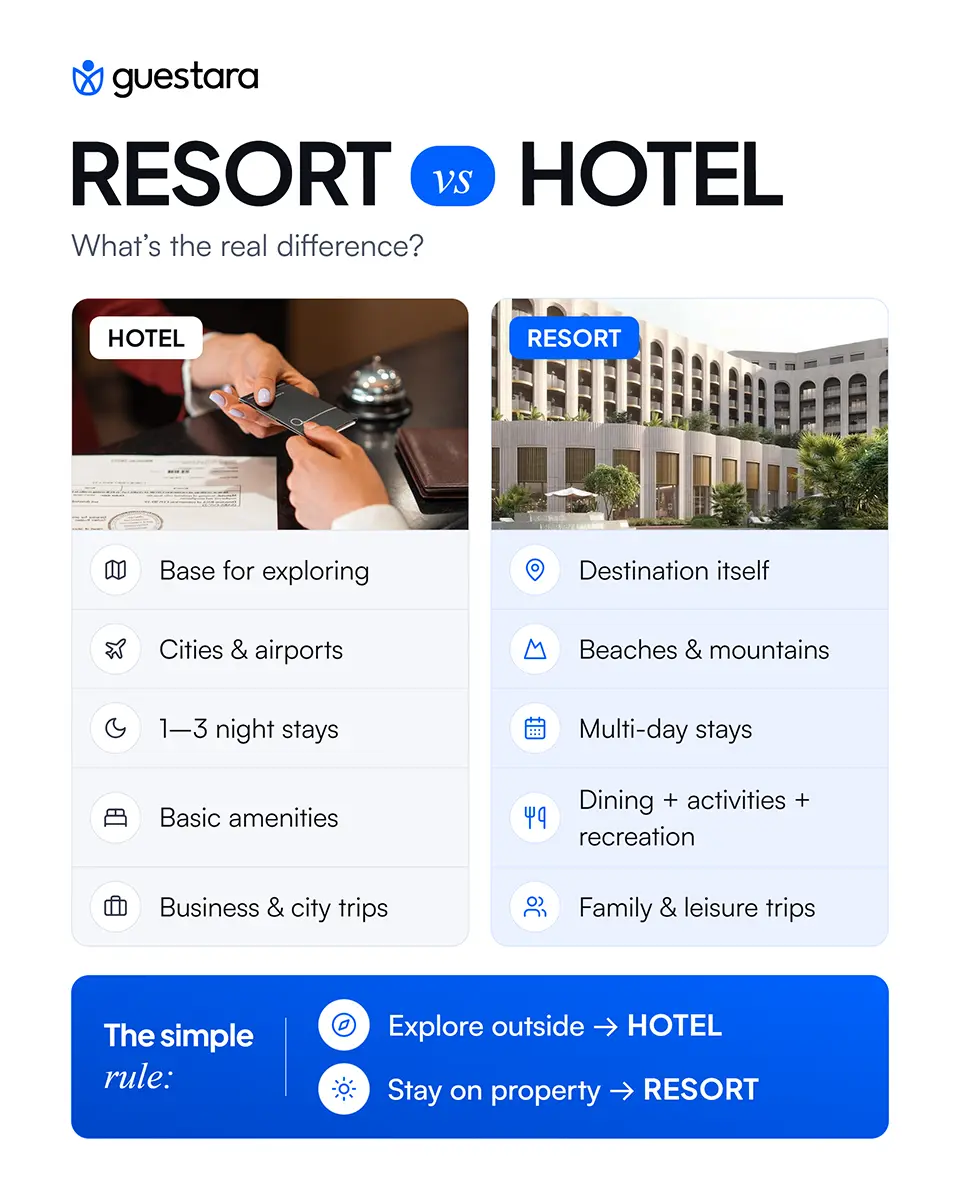
A hotel is a commercial property that sells private rooms for short stays, with services that scale to its class and star rating. Most offer a front desk, daily housekeeping, and at least a basic breakfast, and higher tiers add dining, a gym, a pool, or a spa. Hotels win on location, sitting where guests want quick access to a city, a business district, or an airport.
Common hotel types include boutique hotels that are small and design led with around 100 rooms or fewer, chain hotels that repeat a consistent brand across many locations, business hotels built around meeting rooms and fast Wi-Fi near business hubs, and extended stay hotels with kitchenettes and weekly rates for longer trips.
A resort is a self contained property, usually in a scenic destination, that bundles lodging with dining, recreation, and entertainment so the stay happens almost entirely on site. Resorts sit on larger grounds than hotels and often center the experience on a setting or theme, such as a beach, a ski slope, or a spa. Because guests plan the trip around the property, resorts encourage longer, slower stays.
Common resort types include all inclusive resorts that fold meals, drinks, and activities into one price, beach resorts with waterfront rooms and water sports, wellness and spa resorts built around fitness and treatments, and mountain or ski resorts with slope access and seasonal outdoor activity.
Price is set by what is included, not by the word on the sign. A well located city hotel in a peak week can cost more than a modest resort in the off season. In the United States, average hotel ADR sat near 161 dollars in 2025, up slightly year on year, according to STR/CoStar reporting.
Two costs catch travelers out. Resorts, and increasingly city hotels, add a mandatory resort or destination fee that averaged about 33 dollars a night in a 2025 NerdWallet study of 160 hotels and commonly runs from 15 to 50 dollars. Since May 2025, a US Federal Trade Commission rule requires hotels and booking platforms to show the full price, including these fees, upfront rather than at checkout.
The bigger difference is the pricing model. Many resorts sell all inclusive packages that combine meals, drinks, and activities into one nightly rate, so a higher headline number can still be better value for a family that eats and plays on site. Hotels usually charge room only, then let you pay for extras as you use them.
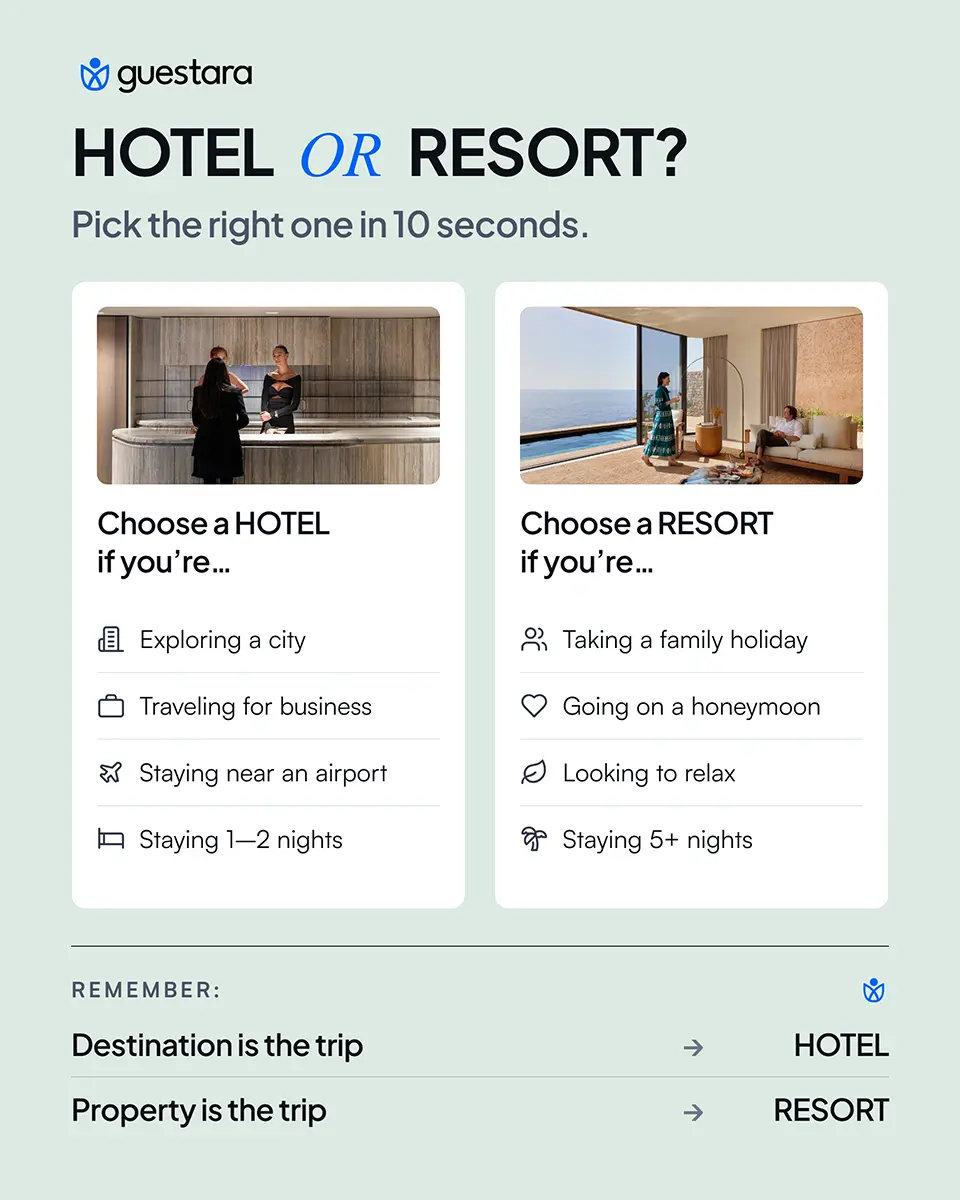
Book a resort when the property is the point of the trip, and book a hotel when the destination around it is. If you want to unpack once, stay put, and have meals and activities handled, a resort fits. If you want a clean, well located base for sightseeing, business, or a city break, a hotel fits.
Use trip type as the deciding rule:
Regional context matters too. In India, a resort usually signals a weekend getaway or destination wedding property near hill stations, backwaters, or beaches such as Lonavala, Coorg, or Goa, while a hotel covers city and business stays in the metros. The label shapes what guests expect before they arrive.
For operators, the hotel or resort label is a promise about the experience, and it sets pricing power, guest expectations, and marketing. A property with a spa, multiple dining outlets, and on site activities may leave revenue on the table by calling itself a hotel, while a city property marketed as a resort risks a mismatch that shows up in reviews. Closing that gap is what proven techniques to lift guest satisfaction are built for.
Whichever label fits, the guest experience has to feel consistent from booking to checkout, a discipline our complete guide to the hotel guest experience covers in depth. Delivering it is largely an operations job across fast arrivals, timely messages, and easy on site ordering over a longer stay. Guestara's Guest App puts a branded guidebook, concierge, and on site ordering in guests' hands, and it connects with your existing PMS and tools so those touchpoints stay in sync without manual work.
[[cta:cta-5 | eyebrow=ADDED REVENUE | heading=See how properties *earn beyond the room rate* on every stay | btn= Explore Upsells | link=https://www.guestara.com/hotel-upsell-software ]]


Resort vs hotel explained: a resort is a self contained destination, a hotel is a base for exploring. Compare cost, amenities, stay, and which to book.
The difference between a resort and a hotel comes down to one thing: whether the property is the destination or the doorway to it. A resort is built to hold your whole trip on site, from meals to activities. A hotel gives you a comfortable room and sends you out to explore the city or coast around it.
You have felt this without naming it. The beachfront place where you never touched your car keys for five days was a resort. The tidy room near the airport where you slept, showered, and left by nine was a hotel. Here is how the two really differ, what each costs, and how to pick the right one.
A hotel provides paid overnight accommodation, usually in a city or near a transport hub, for travelers who plan to spend most of their time off the property. A resort is a larger, self contained property, usually in a leisure destination, designed so guests can eat, relax, and find entertainment without leaving. The core split is purpose: a hotel is a place to stay, a resort is a place to stay put.
A hotel is a commercial property that sells private rooms for short stays, with services that scale to its class and star rating. Most offer a front desk, daily housekeeping, and at least a basic breakfast, and higher tiers add dining, a gym, a pool, or a spa. Hotels win on location, sitting where guests want quick access to a city, a business district, or an airport.
Common hotel types include boutique hotels that are small and design led with around 100 rooms or fewer, chain hotels that repeat a consistent brand across many locations, business hotels built around meeting rooms and fast Wi-Fi near business hubs, and extended stay hotels with kitchenettes and weekly rates for longer trips.
A resort is a self contained property, usually in a scenic destination, that bundles lodging with dining, recreation, and entertainment so the stay happens almost entirely on site. Resorts sit on larger grounds than hotels and often center the experience on a setting or theme, such as a beach, a ski slope, or a spa. Because guests plan the trip around the property, resorts encourage longer, slower stays.
Common resort types include all inclusive resorts that fold meals, drinks, and activities into one price, beach resorts with waterfront rooms and water sports, wellness and spa resorts built around fitness and treatments, and mountain or ski resorts with slope access and seasonal outdoor activity.
Price is set by what is included, not by the word on the sign. A well located city hotel in a peak week can cost more than a modest resort in the off season. In the United States, average hotel ADR sat near 161 dollars in 2025, up slightly year on year, according to STR/CoStar reporting.
Two costs catch travelers out. Resorts, and increasingly city hotels, add a mandatory resort or destination fee that averaged about 33 dollars a night in a 2025 NerdWallet study of 160 hotels and commonly runs from 15 to 50 dollars. Since May 2025, a US Federal Trade Commission rule requires hotels and booking platforms to show the full price, including these fees, upfront rather than at checkout.
The bigger difference is the pricing model. Many resorts sell all inclusive packages that combine meals, drinks, and activities into one nightly rate, so a higher headline number can still be better value for a family that eats and plays on site. Hotels usually charge room only, then let you pay for extras as you use them.
Book a resort when the property is the point of the trip, and book a hotel when the destination around it is. If you want to unpack once, stay put, and have meals and activities handled, a resort fits. If you want a clean, well located base for sightseeing, business, or a city break, a hotel fits.
Use trip type as the deciding rule:
Regional context matters too. In India, a resort usually signals a weekend getaway or destination wedding property near hill stations, backwaters, or beaches such as Lonavala, Coorg, or Goa, while a hotel covers city and business stays in the metros. The label shapes what guests expect before they arrive.
For operators, the hotel or resort label is a promise about the experience, and it sets pricing power, guest expectations, and marketing. A property with a spa, multiple dining outlets, and on site activities may leave revenue on the table by calling itself a hotel, while a city property marketed as a resort risks a mismatch that shows up in reviews. Closing that gap is what proven techniques to lift guest satisfaction are built for.
Whichever label fits, the guest experience has to feel consistent from booking to checkout, a discipline our complete guide to the hotel guest experience covers in depth. Delivering it is largely an operations job across fast arrivals, timely messages, and easy on site ordering over a longer stay. Guestara's Guest App puts a branded guidebook, concierge, and on site ordering in guests' hands, and it connects with your existing PMS and tools so those touchpoints stay in sync without manual work.
[[cta:cta-5 | eyebrow=ADDED REVENUE | heading=See how properties *earn beyond the room rate* on every stay | btn= Explore Upsells | link=https://www.guestara.com/hotel-upsell-software ]]
No. Price depends on location, season, and what is included, not on the label. A city hotel in peak demand can cost more than an off season resort, and an all inclusive resort rate can be better value than a cheap room plus paid meals and activities.
Yes. When a hotel adds extensive on site dining, recreation, and entertainment, it can function and market itself as a resort. Hybrid labels like boutique resort or urban resort exist for exactly this overlap.
A motel offers basic, low cost rooms for short stops, usually off a highway, with parking at the door and few amenities. A resort is the opposite, a large and amenity rich destination built for longer, leisure focused stays.
Not as a rule, but they are built for it. Resorts price and program around multi night stays with activities and dining that reward staying put, while hotels are designed for flexible, often single night bookings.
We work closely with the industry leaders to offer seamless solutions




We’re here to help your whole team stay ahead of the curve as you grow.

Get up and running quickly with a personalized onboarding plan

Connect with real people who really get it, 24/7

Checkout our vast library of free resources, templates and more
There's only so much we can say — so let us show you! Schedule a demo today and reach your business goals.



.png)