Discover how self check in hotel technology transforms guest experiences. Learn implementation strategies, costs, and ROI.




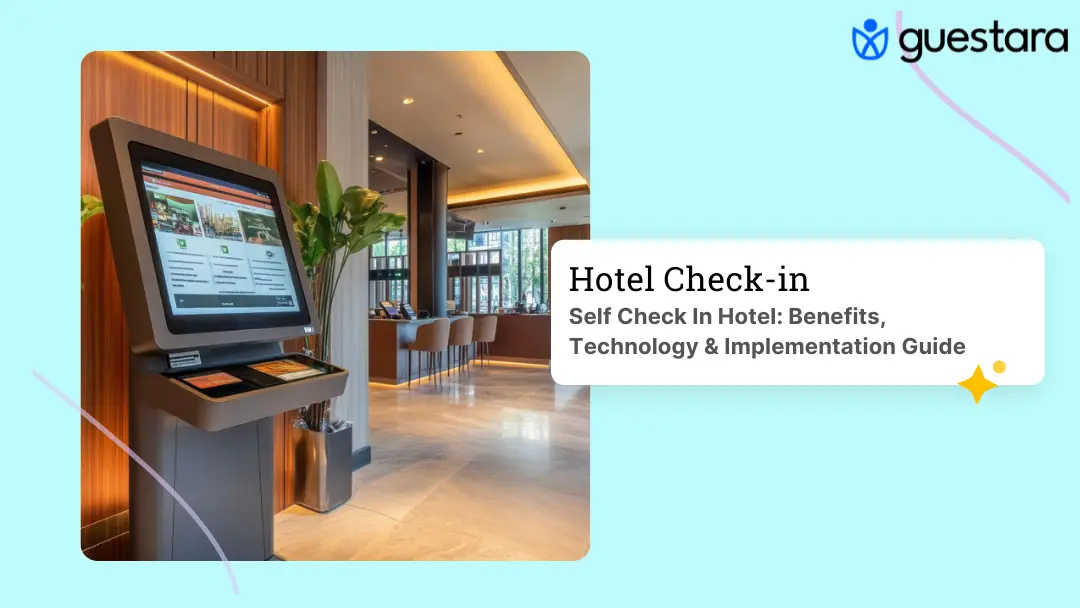
Self check in hotel technology lets guests verify their ID, confirm their reservation, pay, and get their room key on their own, no front desk line required.
Here's why that matters. Your guest just landed after a 6-hour flight and wants one thing: to get to their room. But there's a line at your front desk, five people deep, each taking 8 minutes. Research shows that 70% of American travelers now prefer an app or kiosk over waiting at the front desk, and among Gen Z travelers that jumps to 82%.
This guide covers what works, what doesn't, and how to choose the right self check-in solution for your property.
Self check in hotel systems let guests complete the entire arrival process without staff assistance.
Guests can:
All of this happens through a self-check-in kiosk in your lobby or through their smartphone before they even arrive.
Hotels usually improve adoption by following clear mobile check-in strategies.
If you're planning your rollout, our guide on hotel self check-in implementation and best practices explains how leading hotels increase guest adoption while reducing front desk queues.
The system connects directly to your property management system. This means room availability, guest data, and payments update in real-time across all departments.
No manual data entry. No communication gaps. No errors from misheard names or typos.
The process takes about 90 seconds when done right.
Many hotels achieve this by designing a 2-minute digital check-in flow.
Step 1: Guest receives check-in link Before arrival, guests get an email or SMS with a unique link. This happens automatically after booking confirmation. They can complete the entire process on their phone.
A structured pre-arrival messaging sequence helps ensure guests actually complete check-in before arrival
Step 2: Identity verification with AI Here's where modern systems shine. Guests have two options:
Option 1: Manual entry - they type their details.
Option 2: AI-powered auto-fill - they simply scan or upload their ID proof (driver's license, passport, or any government ID). The AI instantly extracts all information and fills the form automatically.
For international guests, the system handles passport scanning with the same accuracy. No typing. No errors. Just point, scan, done.
Step 3: Reservation confirmation The system pulls up their booking details. Guests review dates, room type, and rate. They can request changes or upgrades at this stage.
Step 4: Payment processing Guests either pay the balance or register a credit card for incidentals. The system accepts multiple payment methods and currencies.
Step 5: Staff verification (takes 30 seconds) Your front desk team receives the completed form. They quickly verify the information matches the ID. One click marks it as verified. That's it.
Your staff spends 30 seconds instead of 8 minutes per guest.
Step 6: Key issuance For kiosks: the machine dispenses a physical key card. For mobile check-in: guests receive a digital key on their smartphone.
Hotels looking to eliminate plastic key cards altogether often integrate their check-in platform with hotel smart locks, allowing guests to unlock rooms securely using their mobile devices.
Step 7: System updates Your PMS immediately updates room status. Housekeeping knows the room is occupied. Front desk sees the arrival time. Revenue management tracks the check-in.
The entire process runs with minimal staff intervention - just a quick verification step.
[[cta:cta-4 | eyebrow=Self Check-In | heading=See how , *90-second check-in* works on your property| sub=AI-powered, instant PMS sync, zero wait | btn=Explore Self Check-In | link=https://www.guestara.com/contactless-checkin-checkout ]]
People often confuse these two terms. They're different.
Self check-in is a complete, standalone process. Guests handle everything themselves from start to finish. No staff involvement required. They can check in from anywhere using a kiosk or mobile app.
Pre check-in is partial. Guests submit information before arrival but still need to visit the front desk. They might upload their ID online and fill out registration forms, but they'll still wait in line to get their key.
Self check-in offers true independence. Pre check-in just moves some paperwork online.
For guest satisfaction, self check-in wins every time.
.png)
The business case for contactless hotel check-in is strong. Here's what the data shows.
Your front desk team can focus on guest service instead of data entry.
Traditional check-in requires staff to manually type guest information, verify IDs character by character, process payments, and explain hotel policies. This takes 8-10 minutes per guest.
With AI-powered check-in, guests scan their ID and all details auto-fill. Your staff only verifies the information is correct - a 30-second task instead of 8 minutes.
Hotels report reducing front desk staffing by 30-40% during standard hours. The savings compound over time.
One staff member can now oversee multiple check-ins simultaneously while handling exceptions and special requests. Your payroll costs drop. Your service quality improves.
The fully digital process also eliminates paper registration cards, printing costs, and storage needs.
Data from hotels using kiosks shows something surprising: guests checking in via kiosk are three times more likely to purchase an upsell compared to those using the front desk.
You can compare tools enabling this in our list of best hotel check-in software solutions.
These systems generate nearly 70% more upsell revenue per check-in.
Why? Guests browse upgrade options at their own pace. No pressure. No awkward conversation. Just clear choices with transparent pricing.
They can see photos of premium rooms, compare features, and decide for themselves.
Your property never closes to new arrivals.
Guests arriving at 2 AM don't need a night auditor standing by. They check themselves in using the kiosk or mobile app.
Late flights? No problem. Early morning arrivals? Handled automatically.
This flexibility improves occupancy rates. You can accept bookings for any arrival time without staffing concerns.
Manual data entry creates problems. Misspelled names. Wrong room numbers. Incorrect rates. Transposed ID numbers.
Studies show front desk staff make errors in 15-20% of manual check-ins. A guest named "Priya" becomes "Prya." An address gets one digit wrong. These mistakes create billing issues, compliance problems, and guest frustration.
AI-powered ID scanning eliminates these errors completely. The system reads information directly from the ID document. It extracts text with 95%+ accuracy.
Guests review the auto-filled form on their screen. They spot any rare scanning errors immediately and correct them before submitting.
Your PMS stays clean. Your reports stay accurate. Your billing runs smoothly. Your compliance documentation is always correct.
Digital systems capture information you'd never get from front desk interactions.
Guest preferences. Upgrade patterns. Average check-in times. Peak arrival hours. Common issues or questions.
You can analyze this data to improve operations. Adjust staffing. Refine pricing. Create targeted marketing campaigns.
When a guest checks in digitally, your entire property knows instantly.
Housekeeping sees the occupied room. Maintenance gets special requests. Food and beverage prepares for expected covers. Front desk tracks arrivals against forecasts.
Everyone works from the same real-time data. No radio calls. No confusion. No delays.
Self check-in cuts front desk staffing needs by 30-40% and check-in time per guest from 8-10 minutes to 30 seconds. It also drives up to 70% more upsell revenue and eliminates the 15-20% error rate common in manual check-ins.
Your guests care about speed and convenience. Self-check-in delivers both.
Cornell's Center for Hospitality Research found that check-in wait times beyond 5 minutes slash guest satisfaction by 47% in the United States.
AI-powered mobile check-in reduces this to under 90 seconds. Guests simply scan their ID. The form fills automatically. They review and submit.
No typing on small phone keyboards. No spelling their name three times. No fumbling for credit cards.
For kiosks, the process takes about 2 minutes - still 75% faster than traditional front desk check-in.
No lines. No waiting. No frustration.
Your guests go straight to their rooms.
Some guests prefer minimal interaction.
Business travelers on expense accounts don't want small talk. Couples on romantic getaways value discretion. Tired parents with sleeping children need quiet efficiency.
Self-check-in respects their privacy. They complete the process at their own pace without conversation or questions.
Guests choose when to check in. They browse upgrade options. They select specific room preferences.
The experience feels empowering rather than transactional.
Research shows that 73% of guests would use mobile check-in if available, and 41% are more likely to book hotels that offer it.
Your tech-savvy guests expect this option. Providing it influences their booking decisions.
Hotels that guide guests properly through messaging see higher adoption — here’s a mobile check-in adoption strategy.
Post-pandemic awareness hasn't disappeared. Many travelers still prefer limiting physical contact and shared surfaces.
Contactless check-in addresses these concerns. Guests use their own devices or clean, regularly sanitized kiosks.
No shared pens. No paper forms. No touching credit card terminals that hundreds of people used that day.
The peace of mind matters to health-conscious guests.
Guests go from an 8-10 minute wait to under 90 seconds, with more privacy and control over their arrival. 73% would use mobile check-in if offered, and 41% are more likely to book a hotel that has it.
You have two main options: mobile check-in and self-check-in kiosks. Most successful properties use both.
Guests complete check-in on their smartphone before arriving. No app download required - they receive a web link via SMS or email.
The system connects to your PMS. It pulls reservation details, processes payments, and issues digital keys.
The AI advantage: Guests don't type anything manually. They scan or upload their ID proof (driver's license, passport, Aadhaar card). The AI extracts all information instantly - name, address, ID number, date of birth, expiry date.
For international guests, passport scanning works with the same accuracy across 150+ countries.
Your staff receives the completed form for quick verification. One click confirms accuracy. The guest gets their digital key.
They walk past the front desk and go directly to their room. Their smartphone unlocks the door.
For hotels, this means the entire arrival workflow, ID verification, payment, and room assignment, happens before the guest is even inside the building. Front desk and lobby staff shift entirely into a hospitality role rather than a transactional one, since there's no check-in transaction left to process.
Best for:
Key features to include:
Physical touchscreen terminals in your lobby handle the entire check-in process.
Guests scan their confirmation email or enter their booking reference. The kiosk verifies their identity, processes payment, and dispenses a key card.
The interface guides them step-by-step with clear instructions in multiple languages.
Best for:
Key features to include:
Mobile check-in suits tech-savvy, urban, or business-traveler properties; kiosks suit high-volume resorts and diverse international guest bases. Most successful hotels run both.
The self-check-in hotel market is growing fast.
According to DataIntelo research, the global smart contactless hotel check-in market reached $2.04 billion in 2024. Analysts project it will grow to $6.06 billion by 2033 at a compound annual growth rate of 13.2%.
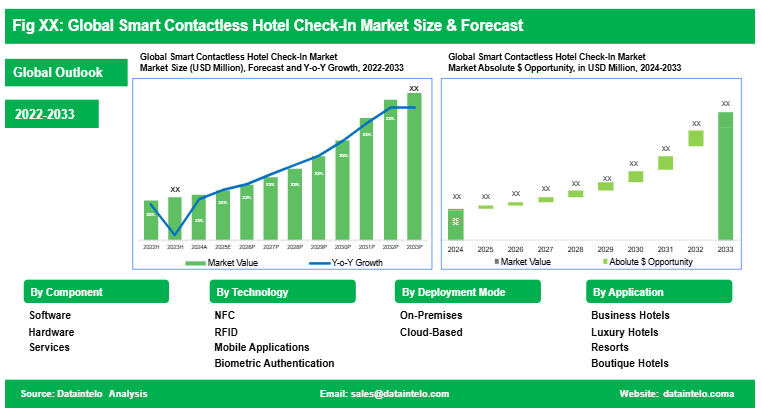
This growth reflects changing guest expectations and operational realities.
The same research shows:
In the United States specifically, Mews data shows that 30% of all reservations at kiosk-enabled hotels now check in through the self-service option. This is 50% higher than the global average of 20%.
American guests are adopting this technology faster than anywhere else in the world.
Mobile check-in is growing even faster. The same research found that 10.5% of U.S. reservations use mobile guest portals for check-in, compared to 8.6% globally.
Six major trends are changing how hotels implement self-check-in systems.
Automated ID recognition is replacing manual data entry.
Guests scan their ID with their phone camera. AI extracts all information instantly - name, address, ID number, dates. The check-in form fills automatically.
This technology handles IDs from any country. Passports. Driver's licenses. National ID cards. Even documents in non-Latin scripts.
The accuracy rate exceeds 95%. Manual typing has a 15-20% error rate.
Hotels using AI scanning reduce check-in time by another 60 seconds and eliminate data entry errors completely.
Facial recognition and fingerprint scanning are replacing traditional ID verification in premium properties.
Guests look at a camera. The system matches their face to their ID photo. Check-in proceeds automatically.
This technology cuts check-in time by another 30 seconds. It also improves security by preventing fraud.
Luxury hotels are adopting biometric systems first. Expect wider adoption as costs decrease.
Machine learning algorithms analyze guest data to make smart suggestions during check-in.
Previous guests who booked standard rooms see targeted upgrade offers. Guests who ordered room service last visit get menu previews. Returning guests receive welcome-back messages with their preferences already applied.
The AI learns from every interaction. Recommendations get better over time.
Self-check-in now connects to in-room systems.
When guests check in on their phone, they can preset room temperature, lighting preferences, and TV channels. The room prepares itself before they arrive.
Some hotels let guests use their smartphone as a universal remote for all room features.
This level of integration creates a seamless technology experience throughout the stay.
This matters for guest experience scores as much as convenience. A guest who walks into a room already set to their preferred temperature and lighting perceives that as premium service, even though no staff member touched the room. Properties piloting this report it as a differentiator in review mentions, particularly at the upper-midscale and luxury tiers where personalization drives loyalty.
Digital check-in eliminates paper registration cards. Hotels save thousands of sheets annually.
Some systems let guests opt out of daily housekeeping during check-in. This reduces water usage, chemical consumption, and energy costs.
Environmentally conscious guests appreciate these options. They align with corporate sustainability goals.
A few cutting-edge properties are testing voice assistants for check-in.
Guests speak to a smart speaker in the lobby. They provide their name and confirmation number verbally. The system processes their check-in through voice commands.
Physical key cards still dispense from a kiosk, but the entire interaction happens through conversation.
This technology helps guests with visual impairments or those who struggle with touchscreens.
It's early-stage technology, still limited to pilot properties rather than mainstream deployment, but it points at where accessibility-first check-in is headed. Hotels serving older demographics or guests with disabilities should watch this space closely since it removes the touchscreen literacy barrier that trips up some self-check-in adoption today.
Self-check-in systems aren't perfect. Every technology has obstacles.
Not all guests are comfortable with technology. Older travelers or international guests from regions with lower digital adoption may struggle.
Many properties solve this with assisted digital check-in flows for older guests.
Solution: Always maintain a staffed front desk option alongside self-service. Train your team to assist guests who need help. Install clear signage explaining both options.
One successful approach: position a staff member near kiosks during peak hours. They can guide guests through the process without taking over.
Software bugs happen. Internet connections drop. Kiosks malfunction.
Solution: Choose vendors with strong track records and responsive support teams. Maintain service level agreements that guarantee rapid response times.
Keep backup systems ready. If your kiosk goes down, staff should have tablets running the same check-in software.
Test your systems weekly. Run dummy transactions. Verify all integrations work correctly.
Your self-check-in system needs to talk to your PMS, payment processor, door lock system, and potentially your CRM and revenue management software.
Solution: Select systems with pre-built integrations for your existing technology stack. Work with vendors who have implementation experience in hospitality.
Budget extra time and money for integration work. Rushed implementations create ongoing problems.
Guests worry about data security. Storing payment information and personal details requires robust protection.
Solution: Ensure your vendor complies with PCI DSS standards for payment processing. Look for systems with encryption at rest and in transit.
Display security certifications prominently in your check-in interface. Transparency builds trust.
Never store complete credit card numbers. Use tokenization instead.
Your front desk team might feel threatened by automation. They worry about job security.
Solution: Frame self-check-in as a tool that elevates their role rather than replacing it.
With routine transactions automated, your team focuses on complex guest requests, problem-solving, and relationship building. These higher-value activities are more satisfying and harder to automate.
Include your front desk staff in the selection and implementation process. Get their input. Address their concerns directly.
The main risks are guest tech-comfort, technical glitches, integration complexity, security, and staff pushback, all solvable with a staffed backup option, reliable vendors, pre-built integrations, PCI DSS compliance, and involving staff early.
Eight factors should guide your decision.
1. PMS Compatibility Your self-check-in system must integrate seamlessly with your existing property management system. Pre-built integrations save time and money.
2. User Interface Design Test the guest-facing interface. Can your parents use it easily? Your grandparents? International guests who speak limited English?
The best interfaces are intuitive. Guests shouldn't need instructions.
3. Hardware Reliability For kiosks, check component quality. Cheap touchscreens fail quickly in high-traffic environments.
Look for commercial-grade hardware designed for 24/7 operation. Review warranty terms.
Ask vendors for mean-time-between-failure data and how many kiosk units they have in production at properties similar to yours. A kiosk that fails during a Friday evening rush does more damage to guest experience than having no kiosk at all, since it forces a queue back onto an unprepared front desk.
4. Vendor Support You'll need help. Technical issues happen. How quickly does the vendor respond?
Ask about support availability. 24/7 phone support costs more but matters when your kiosk breaks at 11 PM on a Saturday.
5. Customization Options Your check-in flow should match your brand and operations.
Can you customize screen layouts? Add your logo? Modify the question sequence? Integrate loyalty programs?
Generic, one-size-fits-all systems limit your flexibility.
This matters most for hotel groups running multiple brands or properties with different guest profiles. A budget property and a luxury resort under the same management shouldn't run an identical check-in flow. Confirm whether customization is a one-time setup fee or something your team can adjust in-house as needs change.
6. Reporting and Analytics Good systems provide detailed data about check-in patterns, guest behavior, and system performance.
You need visibility into usage rates, average check-in times, failure points, and upsell conversion rates.
7. Scalability Will this system work when you open your second property? Your tenth?
Cloud-based solutions scale more easily than on-premise installations.
8. Total Cost of Ownership Look beyond the initial purchase price.
Calculate monthly licensing fees, payment processing costs, maintenance contracts, staff training, and integration expenses.
The cheapest option upfront often costs more over five years.
Prioritize PMS compatibility, an intuitive interface, reliable hardware, responsive vendor support, and total cost of ownership over sticker price alone.
Follow this sequence for smooth deployment.
Properties that implement self-check-in see measurable improvements.
One resort studied by OnRes reduced front desk processing time by 60%. Guests using mobile check-in completed the process in under 2 minutes. Those who preferred kiosks averaged 3 minutes.
Guest satisfaction scores climbed significantly. Mobile app users rated their stay 68 points higher than guests who used traditional check-in (699 vs 631 on a 1000-point scale).
Your results will depend on implementation quality, guest demographics, and staff training. But you can reasonably expect:
The technology pays for itself within 18-24 months for most properties.
Three developments will define the next five years.
Invisible Check-In Guests will check in automatically as they approach the property. Geofencing technology detects their arrival. The system processes check-in in the background. Their digital key activates.
They walk from their car directly to their room without stopping anywhere.
Voice and Gesture Control Touchscreens will give way to voice commands and gesture recognition. Guests will check in through natural conversation.
This accessibility improvement helps elderly guests, those with disabilities, and anyone who prefers speaking to tapping screens.
Expect this to roll out first as a supplement to touchscreen kiosks rather than a replacement, since voice recognition accuracy in noisy hotel lobbies still needs to mature. Properties with high volumes of older or accessibility-needs guests are the most likely early adopters.
Blockchain Verification Decentralized identity systems will replace traditional ID checks. Guests maintain verified digital identities across properties and brands.
Check-in becomes instant verification rather than data collection.
Practically, this would let a guest verify their identity once and reuse that verified credential at any participating hotel brand, eliminating repeat ID scans altogether. It's the furthest out of the three trends. Real-world deployment depends on cross-brand standards that don't exist yet, but it's the logical endpoint of where AI-powered ID scanning is heading.
These technologies exist today in limited deployments. Expect mainstream adoption by 2028-2030.
At Guestara, we built our contactless check-in system specifically for the Indian hospitality market and international properties serving diverse guests.
We solve the biggest pain point other systems ignore: manual data entry.
Your guests don't type anything. They open the check-in link on their phone. They scan or upload their ID proof.
Our AI reads:
The system auto-fills every field in 3 seconds. Name. Address. ID number. Date of birth. Expiry date. Everything.
For international guests, passport recognition works across 150+ countries. Arabic script. Cyrillic. Chinese characters. Hindi. The AI handles them all.
No manual entry. No typos. No spelling mistakes.
Traditional check-in takes 8-10 minutes per guest. Your staff types information, double-checks spelling, processes payments, explains policies.
With Guestara, guests do everything on their phone. Your staff sees the completed form with the ID photo attached. They verify it's correct. One click marks it verified.
That's it. 30 seconds total.
Your front desk team handles 15 check-ins in the time they used to handle 2.
The system automatically stores all required information for government compliance:
Everything your local authorities require, captured automatically during the guest's mobile check-in.
No paper forms. No manual filing. No compliance headaches.
1. Built for India and international markets We understand local requirements. C-Forms. Police reporting. Foreign guest registration. State-specific rules. It's all built in.
2. Works with your existing systems Pre-built integrations with major PMS providers. No complicated API work. No expensive consultants. Setup takes days, not months.
3. Guests use their own phones No app download required. They get an SMS or email link. Works on any smartphone. Android. iPhone. Budget devices. All work perfectly.
Web-based systems typically outperform apps in adoption rate — one of the core contactless check-in strategies.
4. Staff dashboard that makes sense Your team sees pending check-ins. Verifies IDs with one click. Tracks room assignments. Manages special requests. All from one screen.
5. Multiple language support Interface available in English, Hindi, and 10+ regional languages. Guests choose their preferred language. Instructions stay clear for everyone.
6. Real-time reporting Track adoption rates. See average check-in times. Monitor staff verification speed. Identify bottlenecks. Make data-driven decisions.
Our platform uses:
Your guest data stays secure. Your compliance stays intact. Your operations stay smooth.
Week 1: We connect to your PMS, set up your property settings, configure your check-in flow.
Week 2: We train your staff, run test check-ins, go live with real guests.
You're operational in 14 days from signing.
We provide:
One monthly fee covers:
No per-transaction fees. No surprise charges. No forced upgrades.
A 150-room business hotel in Mumbai reduced front desk staffing from 3 staff per shift to 1.
A resort in Goa increased upsell revenue by 40% through automated upgrade offers during mobile check-in.
A boutique property in Delhi achieved 85% guest adoption within 30 days of launch.
Learn more about our implementation process or see how the complete system works at Guestara.com.
Want to see it in action? We'll show you a live demo with your property's data.
For example, Olive Hotels by Embassy saw added revenue of $30.2 per room per month and a 6.1x annualized return on their Guestara investment, proof that the front-desk time savings from self check-in compound into real revenue, not just faster lines.
The hospitality industry is changing. Guest expectations are rising. Labor costs are increasing.
Self check in hotel technology addresses both challenges.
If you’re looking at the broader strategy, start with this complete guide to contactless hotel check-in
You give guests the speed and control they want. You reduce operational costs and improve staff satisfaction.
The question isn't whether to implement self-check-in. It's when.
Every day you wait, competitors are pulling ahead. Guests are choosing properties that offer the convenience they expect.
Watch a guest scan their ID and complete check-in in 90 seconds. See how your staff verifies information in one click. Understand how the fully digital process eliminates waiting times.
Explore Guestara's contactless check-in solution to see the technology in action.
We created a step-by-step guide covering everything from vendor selection to staff training to going live. It includes checklists, timelines, and cost estimates.
Read the complete implementation guide to start planning your deployment.
[[cta:cta-2 | eyebrow=Smart Check-in | heading=Get every guest to their room in *90 seconds, not 10 minutes.*| btn=Book a demo | link=https://www.guestara.com/get-demo ]]
The technology is ready. Your guests are ready.
Is your property?


Discover how self check in hotel technology transforms guest experiences. Learn implementation strategies, costs, and ROI.
Self check in hotel technology lets guests verify their ID, confirm their reservation, pay, and get their room key on their own, no front desk line required.
Here's why that matters. Your guest just landed after a 6-hour flight and wants one thing: to get to their room. But there's a line at your front desk, five people deep, each taking 8 minutes. Research shows that 70% of American travelers now prefer an app or kiosk over waiting at the front desk, and among Gen Z travelers that jumps to 82%.
This guide covers what works, what doesn't, and how to choose the right self check-in solution for your property.
Self check in hotel systems let guests complete the entire arrival process without staff assistance.
Guests can:
All of this happens through a self-check-in kiosk in your lobby or through their smartphone before they even arrive.
Hotels usually improve adoption by following clear mobile check-in strategies.
If you're planning your rollout, our guide on hotel self check-in implementation and best practices explains how leading hotels increase guest adoption while reducing front desk queues.
The system connects directly to your property management system. This means room availability, guest data, and payments update in real-time across all departments.
No manual data entry. No communication gaps. No errors from misheard names or typos.
The process takes about 90 seconds when done right.
Many hotels achieve this by designing a 2-minute digital check-in flow.
Step 1: Guest receives check-in link Before arrival, guests get an email or SMS with a unique link. This happens automatically after booking confirmation. They can complete the entire process on their phone.
A structured pre-arrival messaging sequence helps ensure guests actually complete check-in before arrival
Step 2: Identity verification with AI Here's where modern systems shine. Guests have two options:
Option 1: Manual entry - they type their details.
Option 2: AI-powered auto-fill - they simply scan or upload their ID proof (driver's license, passport, or any government ID). The AI instantly extracts all information and fills the form automatically.
For international guests, the system handles passport scanning with the same accuracy. No typing. No errors. Just point, scan, done.
Step 3: Reservation confirmation The system pulls up their booking details. Guests review dates, room type, and rate. They can request changes or upgrades at this stage.
Step 4: Payment processing Guests either pay the balance or register a credit card for incidentals. The system accepts multiple payment methods and currencies.
Step 5: Staff verification (takes 30 seconds) Your front desk team receives the completed form. They quickly verify the information matches the ID. One click marks it as verified. That's it.
Your staff spends 30 seconds instead of 8 minutes per guest.
Step 6: Key issuance For kiosks: the machine dispenses a physical key card. For mobile check-in: guests receive a digital key on their smartphone.
Hotels looking to eliminate plastic key cards altogether often integrate their check-in platform with hotel smart locks, allowing guests to unlock rooms securely using their mobile devices.
Step 7: System updates Your PMS immediately updates room status. Housekeeping knows the room is occupied. Front desk sees the arrival time. Revenue management tracks the check-in.
The entire process runs with minimal staff intervention - just a quick verification step.
[[cta:cta-4 | eyebrow=Self Check-In | heading=See how , *90-second check-in* works on your property| sub=AI-powered, instant PMS sync, zero wait | btn=Explore Self Check-In | link=https://www.guestara.com/contactless-checkin-checkout ]]
People often confuse these two terms. They're different.
Self check-in is a complete, standalone process. Guests handle everything themselves from start to finish. No staff involvement required. They can check in from anywhere using a kiosk or mobile app.
Pre check-in is partial. Guests submit information before arrival but still need to visit the front desk. They might upload their ID online and fill out registration forms, but they'll still wait in line to get their key.
Self check-in offers true independence. Pre check-in just moves some paperwork online.
For guest satisfaction, self check-in wins every time.
The business case for contactless hotel check-in is strong. Here's what the data shows.
Your front desk team can focus on guest service instead of data entry.
Traditional check-in requires staff to manually type guest information, verify IDs character by character, process payments, and explain hotel policies. This takes 8-10 minutes per guest.
With AI-powered check-in, guests scan their ID and all details auto-fill. Your staff only verifies the information is correct - a 30-second task instead of 8 minutes.
Hotels report reducing front desk staffing by 30-40% during standard hours. The savings compound over time.
One staff member can now oversee multiple check-ins simultaneously while handling exceptions and special requests. Your payroll costs drop. Your service quality improves.
The fully digital process also eliminates paper registration cards, printing costs, and storage needs.
Data from hotels using kiosks shows something surprising: guests checking in via kiosk are three times more likely to purchase an upsell compared to those using the front desk.
You can compare tools enabling this in our list of best hotel check-in software solutions.
These systems generate nearly 70% more upsell revenue per check-in.
Why? Guests browse upgrade options at their own pace. No pressure. No awkward conversation. Just clear choices with transparent pricing.
They can see photos of premium rooms, compare features, and decide for themselves.
Your property never closes to new arrivals.
Guests arriving at 2 AM don't need a night auditor standing by. They check themselves in using the kiosk or mobile app.
Late flights? No problem. Early morning arrivals? Handled automatically.
This flexibility improves occupancy rates. You can accept bookings for any arrival time without staffing concerns.
Manual data entry creates problems. Misspelled names. Wrong room numbers. Incorrect rates. Transposed ID numbers.
Studies show front desk staff make errors in 15-20% of manual check-ins. A guest named "Priya" becomes "Prya." An address gets one digit wrong. These mistakes create billing issues, compliance problems, and guest frustration.
AI-powered ID scanning eliminates these errors completely. The system reads information directly from the ID document. It extracts text with 95%+ accuracy.
Guests review the auto-filled form on their screen. They spot any rare scanning errors immediately and correct them before submitting.
Your PMS stays clean. Your reports stay accurate. Your billing runs smoothly. Your compliance documentation is always correct.
Digital systems capture information you'd never get from front desk interactions.
Guest preferences. Upgrade patterns. Average check-in times. Peak arrival hours. Common issues or questions.
You can analyze this data to improve operations. Adjust staffing. Refine pricing. Create targeted marketing campaigns.
When a guest checks in digitally, your entire property knows instantly.
Housekeeping sees the occupied room. Maintenance gets special requests. Food and beverage prepares for expected covers. Front desk tracks arrivals against forecasts.
Everyone works from the same real-time data. No radio calls. No confusion. No delays.
Self check-in cuts front desk staffing needs by 30-40% and check-in time per guest from 8-10 minutes to 30 seconds. It also drives up to 70% more upsell revenue and eliminates the 15-20% error rate common in manual check-ins.
Your guests care about speed and convenience. Self-check-in delivers both.
Cornell's Center for Hospitality Research found that check-in wait times beyond 5 minutes slash guest satisfaction by 47% in the United States.
AI-powered mobile check-in reduces this to under 90 seconds. Guests simply scan their ID. The form fills automatically. They review and submit.
No typing on small phone keyboards. No spelling their name three times. No fumbling for credit cards.
For kiosks, the process takes about 2 minutes - still 75% faster than traditional front desk check-in.
No lines. No waiting. No frustration.
Your guests go straight to their rooms.
Some guests prefer minimal interaction.
Business travelers on expense accounts don't want small talk. Couples on romantic getaways value discretion. Tired parents with sleeping children need quiet efficiency.
Self-check-in respects their privacy. They complete the process at their own pace without conversation or questions.
Guests choose when to check in. They browse upgrade options. They select specific room preferences.
The experience feels empowering rather than transactional.
Research shows that 73% of guests would use mobile check-in if available, and 41% are more likely to book hotels that offer it.
Your tech-savvy guests expect this option. Providing it influences their booking decisions.
Hotels that guide guests properly through messaging see higher adoption — here’s a mobile check-in adoption strategy.
Post-pandemic awareness hasn't disappeared. Many travelers still prefer limiting physical contact and shared surfaces.
Contactless check-in addresses these concerns. Guests use their own devices or clean, regularly sanitized kiosks.
No shared pens. No paper forms. No touching credit card terminals that hundreds of people used that day.
The peace of mind matters to health-conscious guests.
Guests go from an 8-10 minute wait to under 90 seconds, with more privacy and control over their arrival. 73% would use mobile check-in if offered, and 41% are more likely to book a hotel that has it.
You have two main options: mobile check-in and self-check-in kiosks. Most successful properties use both.
Guests complete check-in on their smartphone before arriving. No app download required - they receive a web link via SMS or email.
The system connects to your PMS. It pulls reservation details, processes payments, and issues digital keys.
The AI advantage: Guests don't type anything manually. They scan or upload their ID proof (driver's license, passport, Aadhaar card). The AI extracts all information instantly - name, address, ID number, date of birth, expiry date.
For international guests, passport scanning works with the same accuracy across 150+ countries.
Your staff receives the completed form for quick verification. One click confirms accuracy. The guest gets their digital key.
They walk past the front desk and go directly to their room. Their smartphone unlocks the door.
For hotels, this means the entire arrival workflow, ID verification, payment, and room assignment, happens before the guest is even inside the building. Front desk and lobby staff shift entirely into a hospitality role rather than a transactional one, since there's no check-in transaction left to process.
Best for:
Key features to include:
Physical touchscreen terminals in your lobby handle the entire check-in process.
Guests scan their confirmation email or enter their booking reference. The kiosk verifies their identity, processes payment, and dispenses a key card.
The interface guides them step-by-step with clear instructions in multiple languages.
Best for:
Key features to include:
Mobile check-in suits tech-savvy, urban, or business-traveler properties; kiosks suit high-volume resorts and diverse international guest bases. Most successful hotels run both.
The self-check-in hotel market is growing fast.
According to DataIntelo research, the global smart contactless hotel check-in market reached $2.04 billion in 2024. Analysts project it will grow to $6.06 billion by 2033 at a compound annual growth rate of 13.2%.
This growth reflects changing guest expectations and operational realities.
The same research shows:
In the United States specifically, Mews data shows that 30% of all reservations at kiosk-enabled hotels now check in through the self-service option. This is 50% higher than the global average of 20%.
American guests are adopting this technology faster than anywhere else in the world.
Mobile check-in is growing even faster. The same research found that 10.5% of U.S. reservations use mobile guest portals for check-in, compared to 8.6% globally.
Six major trends are changing how hotels implement self-check-in systems.
Automated ID recognition is replacing manual data entry.
Guests scan their ID with their phone camera. AI extracts all information instantly - name, address, ID number, dates. The check-in form fills automatically.
This technology handles IDs from any country. Passports. Driver's licenses. National ID cards. Even documents in non-Latin scripts.
The accuracy rate exceeds 95%. Manual typing has a 15-20% error rate.
Hotels using AI scanning reduce check-in time by another 60 seconds and eliminate data entry errors completely.
Facial recognition and fingerprint scanning are replacing traditional ID verification in premium properties.
Guests look at a camera. The system matches their face to their ID photo. Check-in proceeds automatically.
This technology cuts check-in time by another 30 seconds. It also improves security by preventing fraud.
Luxury hotels are adopting biometric systems first. Expect wider adoption as costs decrease.
Machine learning algorithms analyze guest data to make smart suggestions during check-in.
Previous guests who booked standard rooms see targeted upgrade offers. Guests who ordered room service last visit get menu previews. Returning guests receive welcome-back messages with their preferences already applied.
The AI learns from every interaction. Recommendations get better over time.
Self-check-in now connects to in-room systems.
When guests check in on their phone, they can preset room temperature, lighting preferences, and TV channels. The room prepares itself before they arrive.
Some hotels let guests use their smartphone as a universal remote for all room features.
This level of integration creates a seamless technology experience throughout the stay.
This matters for guest experience scores as much as convenience. A guest who walks into a room already set to their preferred temperature and lighting perceives that as premium service, even though no staff member touched the room. Properties piloting this report it as a differentiator in review mentions, particularly at the upper-midscale and luxury tiers where personalization drives loyalty.
Digital check-in eliminates paper registration cards. Hotels save thousands of sheets annually.
Some systems let guests opt out of daily housekeeping during check-in. This reduces water usage, chemical consumption, and energy costs.
Environmentally conscious guests appreciate these options. They align with corporate sustainability goals.
A few cutting-edge properties are testing voice assistants for check-in.
Guests speak to a smart speaker in the lobby. They provide their name and confirmation number verbally. The system processes their check-in through voice commands.
Physical key cards still dispense from a kiosk, but the entire interaction happens through conversation.
This technology helps guests with visual impairments or those who struggle with touchscreens.
It's early-stage technology, still limited to pilot properties rather than mainstream deployment, but it points at where accessibility-first check-in is headed. Hotels serving older demographics or guests with disabilities should watch this space closely since it removes the touchscreen literacy barrier that trips up some self-check-in adoption today.
Self-check-in systems aren't perfect. Every technology has obstacles.
Not all guests are comfortable with technology. Older travelers or international guests from regions with lower digital adoption may struggle.
Many properties solve this with assisted digital check-in flows for older guests.
Solution: Always maintain a staffed front desk option alongside self-service. Train your team to assist guests who need help. Install clear signage explaining both options.
One successful approach: position a staff member near kiosks during peak hours. They can guide guests through the process without taking over.
Software bugs happen. Internet connections drop. Kiosks malfunction.
Solution: Choose vendors with strong track records and responsive support teams. Maintain service level agreements that guarantee rapid response times.
Keep backup systems ready. If your kiosk goes down, staff should have tablets running the same check-in software.
Test your systems weekly. Run dummy transactions. Verify all integrations work correctly.
Your self-check-in system needs to talk to your PMS, payment processor, door lock system, and potentially your CRM and revenue management software.
Solution: Select systems with pre-built integrations for your existing technology stack. Work with vendors who have implementation experience in hospitality.
Budget extra time and money for integration work. Rushed implementations create ongoing problems.
Guests worry about data security. Storing payment information and personal details requires robust protection.
Solution: Ensure your vendor complies with PCI DSS standards for payment processing. Look for systems with encryption at rest and in transit.
Display security certifications prominently in your check-in interface. Transparency builds trust.
Never store complete credit card numbers. Use tokenization instead.
Your front desk team might feel threatened by automation. They worry about job security.
Solution: Frame self-check-in as a tool that elevates their role rather than replacing it.
With routine transactions automated, your team focuses on complex guest requests, problem-solving, and relationship building. These higher-value activities are more satisfying and harder to automate.
Include your front desk staff in the selection and implementation process. Get their input. Address their concerns directly.
The main risks are guest tech-comfort, technical glitches, integration complexity, security, and staff pushback, all solvable with a staffed backup option, reliable vendors, pre-built integrations, PCI DSS compliance, and involving staff early.
Eight factors should guide your decision.
1. PMS Compatibility Your self-check-in system must integrate seamlessly with your existing property management system. Pre-built integrations save time and money.
2. User Interface Design Test the guest-facing interface. Can your parents use it easily? Your grandparents? International guests who speak limited English?
The best interfaces are intuitive. Guests shouldn't need instructions.
3. Hardware Reliability For kiosks, check component quality. Cheap touchscreens fail quickly in high-traffic environments.
Look for commercial-grade hardware designed for 24/7 operation. Review warranty terms.
Ask vendors for mean-time-between-failure data and how many kiosk units they have in production at properties similar to yours. A kiosk that fails during a Friday evening rush does more damage to guest experience than having no kiosk at all, since it forces a queue back onto an unprepared front desk.
4. Vendor Support You'll need help. Technical issues happen. How quickly does the vendor respond?
Ask about support availability. 24/7 phone support costs more but matters when your kiosk breaks at 11 PM on a Saturday.
5. Customization Options Your check-in flow should match your brand and operations.
Can you customize screen layouts? Add your logo? Modify the question sequence? Integrate loyalty programs?
Generic, one-size-fits-all systems limit your flexibility.
This matters most for hotel groups running multiple brands or properties with different guest profiles. A budget property and a luxury resort under the same management shouldn't run an identical check-in flow. Confirm whether customization is a one-time setup fee or something your team can adjust in-house as needs change.
6. Reporting and Analytics Good systems provide detailed data about check-in patterns, guest behavior, and system performance.
You need visibility into usage rates, average check-in times, failure points, and upsell conversion rates.
7. Scalability Will this system work when you open your second property? Your tenth?
Cloud-based solutions scale more easily than on-premise installations.
8. Total Cost of Ownership Look beyond the initial purchase price.
Calculate monthly licensing fees, payment processing costs, maintenance contracts, staff training, and integration expenses.
The cheapest option upfront often costs more over five years.
Prioritize PMS compatibility, an intuitive interface, reliable hardware, responsive vendor support, and total cost of ownership over sticker price alone.
Follow this sequence for smooth deployment.
Properties that implement self-check-in see measurable improvements.
One resort studied by OnRes reduced front desk processing time by 60%. Guests using mobile check-in completed the process in under 2 minutes. Those who preferred kiosks averaged 3 minutes.
Guest satisfaction scores climbed significantly. Mobile app users rated their stay 68 points higher than guests who used traditional check-in (699 vs 631 on a 1000-point scale).
Your results will depend on implementation quality, guest demographics, and staff training. But you can reasonably expect:
The technology pays for itself within 18-24 months for most properties.
Three developments will define the next five years.
Invisible Check-In Guests will check in automatically as they approach the property. Geofencing technology detects their arrival. The system processes check-in in the background. Their digital key activates.
They walk from their car directly to their room without stopping anywhere.
Voice and Gesture Control Touchscreens will give way to voice commands and gesture recognition. Guests will check in through natural conversation.
This accessibility improvement helps elderly guests, those with disabilities, and anyone who prefers speaking to tapping screens.
Expect this to roll out first as a supplement to touchscreen kiosks rather than a replacement, since voice recognition accuracy in noisy hotel lobbies still needs to mature. Properties with high volumes of older or accessibility-needs guests are the most likely early adopters.
Blockchain Verification Decentralized identity systems will replace traditional ID checks. Guests maintain verified digital identities across properties and brands.
Check-in becomes instant verification rather than data collection.
Practically, this would let a guest verify their identity once and reuse that verified credential at any participating hotel brand, eliminating repeat ID scans altogether. It's the furthest out of the three trends. Real-world deployment depends on cross-brand standards that don't exist yet, but it's the logical endpoint of where AI-powered ID scanning is heading.
These technologies exist today in limited deployments. Expect mainstream adoption by 2028-2030.
At Guestara, we built our contactless check-in system specifically for the Indian hospitality market and international properties serving diverse guests.
We solve the biggest pain point other systems ignore: manual data entry.
Your guests don't type anything. They open the check-in link on their phone. They scan or upload their ID proof.
Our AI reads:
The system auto-fills every field in 3 seconds. Name. Address. ID number. Date of birth. Expiry date. Everything.
For international guests, passport recognition works across 150+ countries. Arabic script. Cyrillic. Chinese characters. Hindi. The AI handles them all.
No manual entry. No typos. No spelling mistakes.
Traditional check-in takes 8-10 minutes per guest. Your staff types information, double-checks spelling, processes payments, explains policies.
With Guestara, guests do everything on their phone. Your staff sees the completed form with the ID photo attached. They verify it's correct. One click marks it verified.
That's it. 30 seconds total.
Your front desk team handles 15 check-ins in the time they used to handle 2.
The system automatically stores all required information for government compliance:
Everything your local authorities require, captured automatically during the guest's mobile check-in.
No paper forms. No manual filing. No compliance headaches.
1. Built for India and international markets We understand local requirements. C-Forms. Police reporting. Foreign guest registration. State-specific rules. It's all built in.
2. Works with your existing systems Pre-built integrations with major PMS providers. No complicated API work. No expensive consultants. Setup takes days, not months.
3. Guests use their own phones No app download required. They get an SMS or email link. Works on any smartphone. Android. iPhone. Budget devices. All work perfectly.
Web-based systems typically outperform apps in adoption rate — one of the core contactless check-in strategies.
4. Staff dashboard that makes sense Your team sees pending check-ins. Verifies IDs with one click. Tracks room assignments. Manages special requests. All from one screen.
5. Multiple language support Interface available in English, Hindi, and 10+ regional languages. Guests choose their preferred language. Instructions stay clear for everyone.
6. Real-time reporting Track adoption rates. See average check-in times. Monitor staff verification speed. Identify bottlenecks. Make data-driven decisions.
Our platform uses:
Your guest data stays secure. Your compliance stays intact. Your operations stay smooth.
Week 1: We connect to your PMS, set up your property settings, configure your check-in flow.
Week 2: We train your staff, run test check-ins, go live with real guests.
You're operational in 14 days from signing.
We provide:
One monthly fee covers:
No per-transaction fees. No surprise charges. No forced upgrades.
A 150-room business hotel in Mumbai reduced front desk staffing from 3 staff per shift to 1.
A resort in Goa increased upsell revenue by 40% through automated upgrade offers during mobile check-in.
A boutique property in Delhi achieved 85% guest adoption within 30 days of launch.
Learn more about our implementation process or see how the complete system works at Guestara.com.
Want to see it in action? We'll show you a live demo with your property's data.
For example, Olive Hotels by Embassy saw added revenue of $30.2 per room per month and a 6.1x annualized return on their Guestara investment, proof that the front-desk time savings from self check-in compound into real revenue, not just faster lines.
The hospitality industry is changing. Guest expectations are rising. Labor costs are increasing.
Self check in hotel technology addresses both challenges.
If you’re looking at the broader strategy, start with this complete guide to contactless hotel check-in
You give guests the speed and control they want. You reduce operational costs and improve staff satisfaction.
The question isn't whether to implement self-check-in. It's when.
Every day you wait, competitors are pulling ahead. Guests are choosing properties that offer the convenience they expect.
Watch a guest scan their ID and complete check-in in 90 seconds. See how your staff verifies information in one click. Understand how the fully digital process eliminates waiting times.
Explore Guestara's contactless check-in solution to see the technology in action.
We created a step-by-step guide covering everything from vendor selection to staff training to going live. It includes checklists, timelines, and cost estimates.
Read the complete implementation guide to start planning your deployment.
[[cta:cta-2 | eyebrow=Smart Check-in | heading=Get every guest to their room in *90 seconds, not 10 minutes.*| btn=Book a demo | link=https://www.guestara.com/get-demo ]]
The technology is ready. Your guests are ready.
Is your property?
Self check-in hotel technology allows guests to complete the entire arrival process ID verification, reservation confirmation, payment, and key issuance without waiting at the front desk. It works through mobile check-in links or lobby kiosks that connect directly with the hotel's PMS. With AI-powered ID scanning, the system extracts guest details automatically and reduces check-in time to 90 seconds.
Yes. Modern self check-in systems use encrypted data transmission, PCI DSS–compliant payment processing, and secure OCR for ID verification. Many platforms also support tokenized payments and encrypted storage for government-required documents. Choosing a vendor with compliance features (like C-Forms for India) ensures both guest privacy and regulatory accuracy.
AI-powered check-in dramatically reduces manual data entry errors, cuts front desk workload by 40–60%, improves guest satisfaction with faster arrivals, and increases upsell revenue by up to 70%. Guests can scan their ID, auto-fill details, and receive digital keys without waiting in line leading to higher adoption and more efficient operations.
Self check-in is a complete contactless check-in experience where guests verify their ID, make payments, and receive keys without staff involvement. Pre check-in only collects information in advance, but guests still need to visit the front desk for verification and key pickup. Self check-in reduces waiting time and offers true guest autonomy.
Self check-in pricing usually includes a monthly subscription plus optional kiosk hardware. Most hotels break even within 18–24 months due to reduced labour costs, increased upsells, and fewer operational errors. Properties typically see 20–30% adoption in the first 90 days and significantly higher satisfaction scores for mobile check-in users.
We work closely with the industry leaders to offer seamless solutions




We’re here to help your whole team stay ahead of the curve as you grow.

Get up and running quickly with a personalized onboarding plan

Connect with real people who really get it, 24/7

Checkout our vast library of free resources, templates and more
There's only so much we can say — so let us show you! Schedule a demo today and reach your business goals.


.png)