Learn how WhatsApp and email pre-arrival messages drive hotel self check-in completion. Templates, workflows, and AI-powered solutions inside.




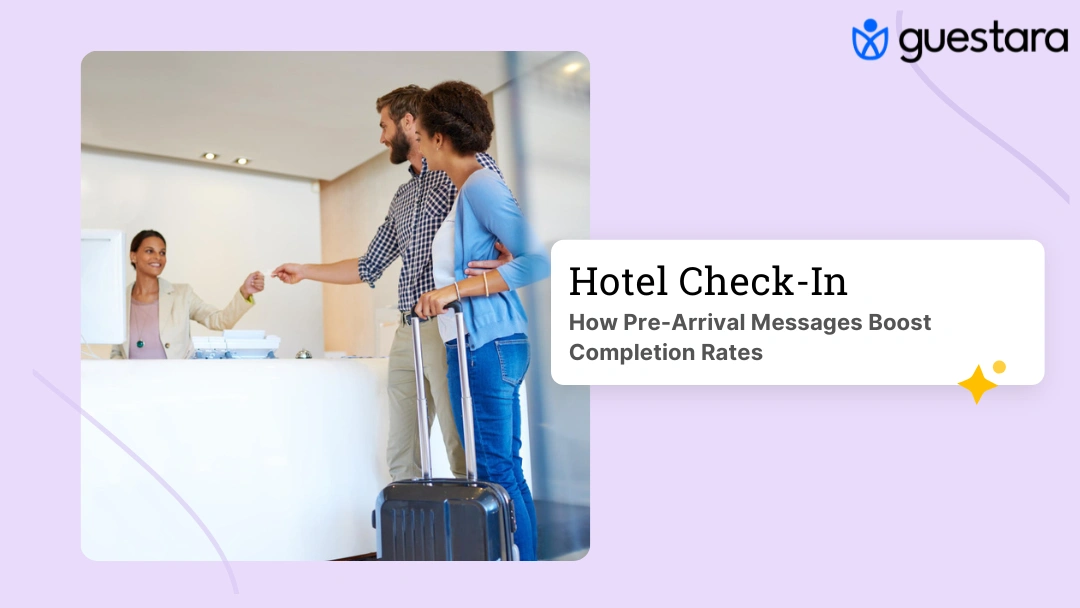
Pre-arrival messages boost self check-in completion by prompting guests to check in before they arrive, while they still have time and attention, instead of hoping they'll do it at the desk. The sequence that works sends 4 timed touchpoints (5 days, 2 days, 24 hours, and 3 hours out) across email and WhatsApp, each one answering a question the guest actually has. Hotels that get this sequence right move completion from around 20% adoption to 50%+.
Because here's the thing: your guests are already stressed before they arrive. They're wondering if parking is included. They're worried about finding your hotel. They don't need to add "Where do I check in?" to their mental load.
This is where self check-in hotels win. But most hoteliers set up the system and assume guests will use it. Completion rates suffer. The real lever is how you message them before they arrive.
This is where self check-in hotels win. But here's what most hoteliers get wrong: they set up the system and assume guests will use it. Completion rates suffer. Guests still line up at your front desk.
The real lever? How you message them before they arrive.
You already know self check-in reduces operational pressure on your staff. What you might not realize is that completion rates directly impact your entire guest journey.
When guests check in through your pre-arrival sequence, you get cleaner data. No transcription errors from tired front desk staff at 10 PM. You know exactly who's in which room. Your housekeeping schedule becomes automatic. Your night auditor has fewer problems to solve.
Guests who complete check-in remotely arrive calmer. They walk in knowing their room is ready. They're not thinking about checkout procedures because they already completed intake forms. Your staff can focus on creating genuine hospitality moments instead of processing paperwork.
The numbers back this up. According to a recent survey,70% of travelers would skip the front desk if given the option. This isn't a nice-to-have feature anymore. It's what guests expect.
Self check-in means guests complete registration outside your front desk. They provide ID information, emergency contacts, and payment details digitally either before arriving or through a kiosk at your lobby.
The difference between self check-in and pre-arrival check-in matters for your messaging strategy.
Self-Check-In: Guests complete the full process independently, either remotely or at a kiosk in your lobby. This includes ID verification, room selection, payment processing, and receiving a digital key. No staff assistance needed.
Pre-Arrival Check-In: Guests complete some steps before arriving, but staff still handles final verification and key handoff. It's a hybrid approach.
Most hotels that see real adoption use a combination. Guests start pre-arrival on their phones (through a WhatsApp link or email), then staff confirms everything is correct when they arrive.
If you want a comprehensive breakdown of contactless solutions beyond messaging, check out our complete guide to contactless check-in for hotel, which covers technology integrations and end-to-end workflows.
Here's the friction most hotels don't measure:
A guest receives a boring email with a link. They're in an airport, on a conference call, or coordinating with travel companions. They assume they'll "do it at the hotel." They don't.
By the time they arrive, they've forgotten the pre-arrival check-in email. They're tired from traveling. They just walk to your front desk out of habit.
Fixing self check-in drop-off sounds simple but requires a specific message sequence.
According to industry research on hotel self-check-in systems, adoption gaps come down to one thing: guests need to understand the value before they'll engage. Vague messaging kills completion. Specific, timely messaging fixes it.
This is where your messaging sequence matters more than your technology.
The guests most likely to complete self check-in are ones who receive multiple touchpoints. Not spam. Real, helpful information that makes them want to check in early.
Olive Hotels by Embassy saw a 248% lift in guest engagement after moving their guest communication onto Guestara. That's the difference a timed message sequence makes: guests act on the check-in link instead of ignoring it.
The psychology is simple: each message should answer a question they actually has.
Message 1 (5 days before arrival): Confirmation and excitement. "Your stay is confirmed. Here's what to expect."
Message 2 (2 days before arrival): Practical details. "Here's where to park and how to enter our building."
Message 3 (24 hours before arrival): The check-in invitation. "Complete check-in on your phone in 2 minutes. You'll skip the front desk."
Message 4 (3 hours before arrival): Final reminder. "We're ready for you. Check in now or see you soon."
Each message in a different channel creates momentum. WhatsApp hits different than email. SMS hits different than both. The repetition isn't annoying when each message serves a purpose.
[[cta:cta-7 | eyebrow=PRE-ARRIVAL MESSAGING | heading=Turn your *pre-arrival messages* into completed check-ins. |btn=Explore Digital Arrival| link=https://www.guestara.com/contactless-checkin-checkout ]]
WhatsApp for Immediacy WhatsApp messages get read 10x faster than emails. Use this channel for time-sensitive information or final reminders. WhatsApp works well for your 24-48 hour window before arrival.
Email for Details Email is where you can be comprehensive. People expect email to contain forms, documents, and detailed instructions. Email is your "setting expectations" channel.
SMS for Urgency If guests haven't engaged after email and WhatsApp, SMS is your final call. It works but use it sparingly. Overuse kills your completion rate because guests stop reading.
The sequence that works: Email (5 days) → WhatsApp (2 days) → WhatsApp (24 hours) → SMS (3 hours if needed).
Here's a real template that drives completion. Use it as a starting point, but personalize it for your brand voice.
Message 1: Confirmation (5 days out)
"Hi [Guest Name], your reservation at [Hotel Name] is confirmed for [Check-In Date]. Looking forward to hosting you! Reply YES to get early check-in instructions."
Why this works: It's short. It asks for engagement (YES reply). It promises value (early check-in instructions). It's not selling anything yet.
Message 2: Practical Information (2 days out)
"[Guest Name], a couple of details for your stay:
Parking: Street parking available on [Street Name], free after 6 PM. We also have valet for $15/day.
Building Entry: Main entrance has a keypad. Code is [CODE]. Service entrance around the back if traffic is heavy.
Questions? Reply here and we'll help."
Why this works: This shows you understand guest anxiety. You're not pushing check-in yet. You're being useful. Guests start thinking about your hotel as helpful rather than transactional.
Message 3: Check-In Invitation (24 hours out)
"[Guest Name], ready to skip the front desk line? Complete your check-in on your phone right now using this link: [LINK]
Takes 2 minutes. You'll upload your ID (our AI reads it automatically), confirm your details, and get your digital key. See you soon!"
Why this works: You're specific about the benefit (skip the line). You're making it sound fast (2 minutes). You're explaining what happens (AI reads ID, get key). No mystery.
Message 4: Final Reminder (3 hours out or 2 hours before standard check-in)
"[Guest Name], we're ready for you! Didn't get a chance to check in on your phone? No worries. Complete it now or just walk up when you arrive. Either way, we'll get you settled quickly."
Why this works: Zero pressure. You're removing the guilt. You're making it clear that not checking in early doesn't derail their experience. This actually increases completion because guests don't feel trapped.
Email is where you can pack more information. Here's a complete pre-arrival email sequence.
Subject Line: "Complete Your Check-In in 2 Minutes (Skip the Desk)"
Why this subject line works: It's specific. It leads with benefit. It's short enough to read on mobile without truncation.
Email Body:
Hi [Guest Name],
Your stay at [Hotel Name] is coming up on [Date], and we want to make sure your arrival is smooth.
You have the option to complete check-in online before you arrive. Here's why you'd want to:
How It Works:
Click the link below. You'll provide your check-in information, upload your ID, and select your room preferences. Our system reads your ID automatically and populates your details. Takes about 2 minutes.
[BUTTON: Complete Check-In Now]
Or just arrive and we'll take care of it. Either way, we're excited to see you.
Questions? Reply to this email or message us on WhatsApp.
Why this structure works: You lead with the benefit. You explain the process clearly. You give them an out (they can skip it). You're not being pushy. You're being genuinely helpful.
This is where Guestara's approach stands out from basic kiosks.
When guests have to manually type their name, address, and document number, friction multiplies. Typos happen. They abandon the process. They show up at your desk anyway.
With AI-powered ID scanning, guests just take a photo of their passport or ID. The system reads it automatically. They verify the information and confirm. That's it.
For international guests especially, this changes everything. You can collect passport information digitally, which you need for compliance anyway. But instead of asking guests to photograph their passport and attach it (friction on top of friction), you just read it from their phone camera.
Research on self-check-in and check-out kiosk systems shows that automated data entry reduces completion drop-off by 30-40%. The fewer steps guests have to take manually, the more likely they complete the process.
Using Guestara's AI ID scanning, Olive Hotels by Embassy reached 99.8% verified guest profiles. That's clean, compliance-ready guest data captured before arrival, instead of being retyped at the desk under a queue.
Pre-arrival check-in doesn't mean your staff disappears. It means they do their job better.
When a guest completes check-in through your app or WhatsApp link, the information flows directly into your PMS. Your front desk team sees it flagged. Their job becomes verification and hospitality, not data entry.
Here's what the workflow looks like:
Guest completes online check-in → Staff receives notification → Staff reviews all information → Staff approves and confirms room assignment → Guest receives digital key → Guest arrives and goes straight to room → Staff offers any welcome service needed
Your staff is now in a position to notice things. They can proactively confirm the guest's room preference. They can mention the restaurant reservation the guest mentioned. They can offer assistance instead of just processing paperwork.
This transforms check-in from a bureaucratic chore into a service opportunity.
If you have international guests, passport collection becomes simpler with pre-arrival check-in.
Most countries require you to collect passport information and sometimes copies. Guests hate providing this at the desk with lines forming behind them. Your staff has to manually enter everything.
With pre-arrival check-in, guests upload passport information on their phone in their own time zone, at their own pace. They're not stressed. You get clean data. Compliance is handled automatically.
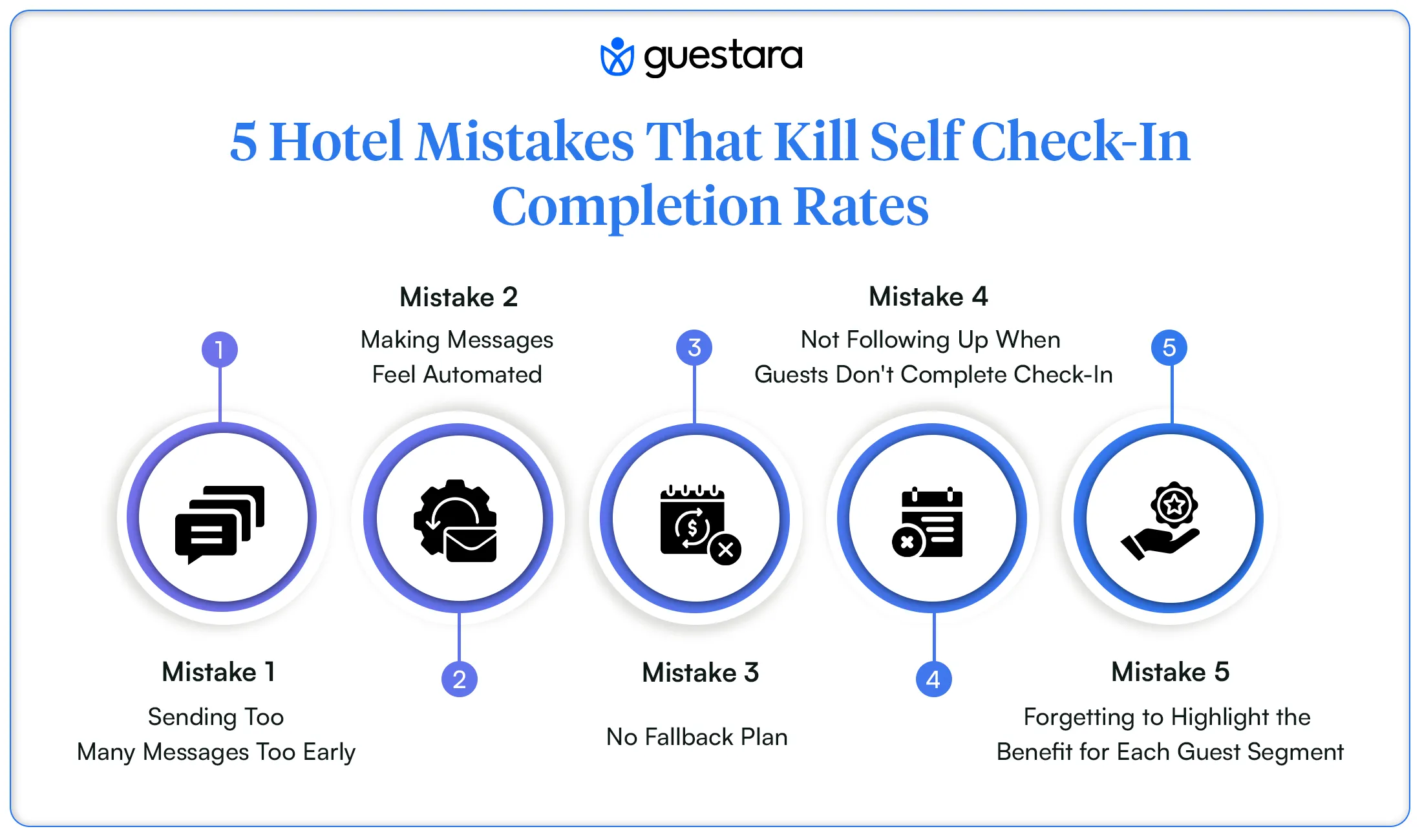
Mistake 1: Sending Too Many Messages Too Early
Hotels often send all their messages on day 1. Guest opens email, gets confused, ignores everything. Space your messages out. Each one should feel timely.
Mistake 2: Making Messages Feel Automated
If your WhatsApp message reads like it came from a robot, guests won't engage. Use their name. Reference their specific room type or any special requests they noted during booking. Feel personal even though it's automated.
Mistake 3: No Fallback Plan
Some guests will never check in online. That's okay. Your staff should be trained to handle walk-ups smoothly. Don't make pre-arrival check-in feel mandatory. Make it an option that genuinely saves time.
Mistake 4: Not Following Up When Guests Don't Complete Check-In
If a guest doesn't complete check-in after your 24-hour reminder, that's your signal to reach out differently. Call them (if you have their number). Send a brief SMS. Sometimes the link didn't work. Sometimes they're in a no-cell area. Don't assume they're ignoring you.
Mistake 5: Forgetting to Highlight the Benefit for Each Guest Segment
Business travelers care about speed. Families care about not feeling rushed. Couples care about privacy and romance. Your messaging should emphasize the benefit that matters to each segment.
According to hospitality industry analysis, hotels that segment their messaging see 2.5x higher engagement than those using one-size-fits-all approaches.
The shift toward self check-in isn't slowing down. Market data shows rapid adoption of self check-in kiosk technology across hotel segments, driven by both guest demand and operational efficiency needs.
What's happening:
Labor Shortages: Hotels can't find enough front desk staff. Self check-in isn't replacing people. It's making existing staff more valuable.
Guest Expectations: Younger travelers expect digital options. It's no longer a nice feature. It's table stakes.
Operational Data: Hotels that implement self check-in see measurable improvements in occupancy management, guest data accuracy, and staff satisfaction.
Cost Efficiency: While there's an upfront investment, the ROI comes from reduced labor hours and fewer errors.
Track these numbers:
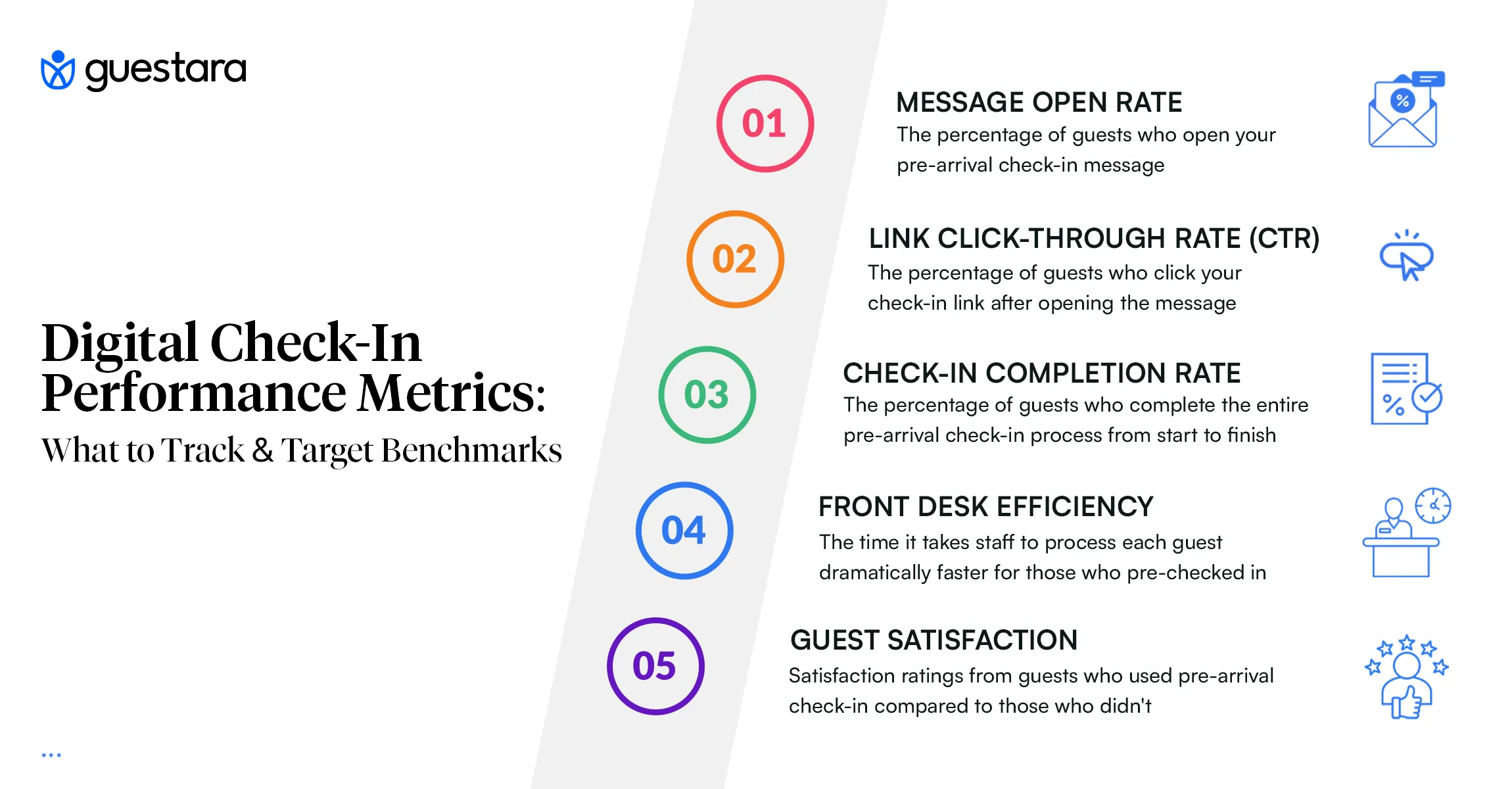
Message Open Rates: If your WhatsApp messages aren't being opened, your timing is off. Shift your send times.
Link Click-Through Rates: If guests are opening messages but not clicking your check-in link, your messaging isn't compelling enough. Simplify. Lead with benefit.
Check-In Completion Rate: What percentage of guests complete the process? Start with 20% adoption and aim for 50%+ within 3 months as you refine your messaging.
Front Desk Efficiency: How many guest interactions are resolved by self check-in? Time staff transactions before and after rolling this out. You should see fewer than 30-45 second interactions for guests who pre-checked-in.
Guest Satisfaction: Ask guests who used pre-arrival check-in if it improved their arrival experience. Track this separately from guests who checked in at the desk.
The hotels that win with self check-in don't treat it like a technology feature. They treat it like part of their guest service story.
Your messaging should feel like you're helping guests get settled, not just cutting down front desk traffic.
"Skip the line" is fine.
"Arrive and go straight to your room" is better.
"We'll have everything ready. You just relax" is best.
The best self check-in isn't the one guests notice. It's the one that feels invisible because it actually works.
For a deeper dive into how modern check-in systems work end-to-end, check out our complete guide to contactless check-in, which covers everything from technology integration to guest communication strategies.
Start with one guest segment. Test with business travelers or return guests. They're most likely to adopt.
Build your message sequence (5 days, 2 days, 24 hours, 3 hours before).
Choose your channels (email for details, WhatsApp for engagement, SMS for final reminder).
Train your staff on the verification workflow.
Track your metrics weekly. Refine your messaging based on what you learn.
And remember: self check-in isn't about technology. It's about respecting your guests' time. When you get that right, completion takes care of itself.
[[cta:cta-6 | eyebrow=Digital Check-In | heading=See how Guestara gets *guests checked* in before they arrive| btn=Book a demo | link=https://www.guestara.com/get-demo ]]


Learn how WhatsApp and email pre-arrival messages drive hotel self check-in completion. Templates, workflows, and AI-powered solutions inside.
Pre-arrival messages boost self check-in completion by prompting guests to check in before they arrive, while they still have time and attention, instead of hoping they'll do it at the desk. The sequence that works sends 4 timed touchpoints (5 days, 2 days, 24 hours, and 3 hours out) across email and WhatsApp, each one answering a question the guest actually has. Hotels that get this sequence right move completion from around 20% adoption to 50%+.
Because here's the thing: your guests are already stressed before they arrive. They're wondering if parking is included. They're worried about finding your hotel. They don't need to add "Where do I check in?" to their mental load.
This is where self check-in hotels win. But most hoteliers set up the system and assume guests will use it. Completion rates suffer. The real lever is how you message them before they arrive.
This is where self check-in hotels win. But here's what most hoteliers get wrong: they set up the system and assume guests will use it. Completion rates suffer. Guests still line up at your front desk.
The real lever? How you message them before they arrive.
You already know self check-in reduces operational pressure on your staff. What you might not realize is that completion rates directly impact your entire guest journey.
When guests check in through your pre-arrival sequence, you get cleaner data. No transcription errors from tired front desk staff at 10 PM. You know exactly who's in which room. Your housekeeping schedule becomes automatic. Your night auditor has fewer problems to solve.
Guests who complete check-in remotely arrive calmer. They walk in knowing their room is ready. They're not thinking about checkout procedures because they already completed intake forms. Your staff can focus on creating genuine hospitality moments instead of processing paperwork.
The numbers back this up. According to a recent survey,70% of travelers would skip the front desk if given the option. This isn't a nice-to-have feature anymore. It's what guests expect.
Self check-in means guests complete registration outside your front desk. They provide ID information, emergency contacts, and payment details digitally either before arriving or through a kiosk at your lobby.
The difference between self check-in and pre-arrival check-in matters for your messaging strategy.
Self-Check-In: Guests complete the full process independently, either remotely or at a kiosk in your lobby. This includes ID verification, room selection, payment processing, and receiving a digital key. No staff assistance needed.
Pre-Arrival Check-In: Guests complete some steps before arriving, but staff still handles final verification and key handoff. It's a hybrid approach.
Most hotels that see real adoption use a combination. Guests start pre-arrival on their phones (through a WhatsApp link or email), then staff confirms everything is correct when they arrive.
If you want a comprehensive breakdown of contactless solutions beyond messaging, check out our complete guide to contactless check-in for hotel, which covers technology integrations and end-to-end workflows.
Here's the friction most hotels don't measure:
A guest receives a boring email with a link. They're in an airport, on a conference call, or coordinating with travel companions. They assume they'll "do it at the hotel." They don't.
By the time they arrive, they've forgotten the pre-arrival check-in email. They're tired from traveling. They just walk to your front desk out of habit.
Fixing self check-in drop-off sounds simple but requires a specific message sequence.
According to industry research on hotel self-check-in systems, adoption gaps come down to one thing: guests need to understand the value before they'll engage. Vague messaging kills completion. Specific, timely messaging fixes it.
This is where your messaging sequence matters more than your technology.
The guests most likely to complete self check-in are ones who receive multiple touchpoints. Not spam. Real, helpful information that makes them want to check in early.
Olive Hotels by Embassy saw a 248% lift in guest engagement after moving their guest communication onto Guestara. That's the difference a timed message sequence makes: guests act on the check-in link instead of ignoring it.
The psychology is simple: each message should answer a question they actually has.
Message 1 (5 days before arrival): Confirmation and excitement. "Your stay is confirmed. Here's what to expect."
Message 2 (2 days before arrival): Practical details. "Here's where to park and how to enter our building."
Message 3 (24 hours before arrival): The check-in invitation. "Complete check-in on your phone in 2 minutes. You'll skip the front desk."
Message 4 (3 hours before arrival): Final reminder. "We're ready for you. Check in now or see you soon."
Each message in a different channel creates momentum. WhatsApp hits different than email. SMS hits different than both. The repetition isn't annoying when each message serves a purpose.
[[cta:cta-7 | eyebrow=PRE-ARRIVAL MESSAGING | heading=Turn your *pre-arrival messages* into completed check-ins. |btn=Explore Digital Arrival| link=https://www.guestara.com/contactless-checkin-checkout ]]
WhatsApp for Immediacy WhatsApp messages get read 10x faster than emails. Use this channel for time-sensitive information or final reminders. WhatsApp works well for your 24-48 hour window before arrival.
Email for Details Email is where you can be comprehensive. People expect email to contain forms, documents, and detailed instructions. Email is your "setting expectations" channel.
SMS for Urgency If guests haven't engaged after email and WhatsApp, SMS is your final call. It works but use it sparingly. Overuse kills your completion rate because guests stop reading.
The sequence that works: Email (5 days) → WhatsApp (2 days) → WhatsApp (24 hours) → SMS (3 hours if needed).
Here's a real template that drives completion. Use it as a starting point, but personalize it for your brand voice.
Message 1: Confirmation (5 days out)
"Hi [Guest Name], your reservation at [Hotel Name] is confirmed for [Check-In Date]. Looking forward to hosting you! Reply YES to get early check-in instructions."
Why this works: It's short. It asks for engagement (YES reply). It promises value (early check-in instructions). It's not selling anything yet.
Message 2: Practical Information (2 days out)
"[Guest Name], a couple of details for your stay:
Parking: Street parking available on [Street Name], free after 6 PM. We also have valet for $15/day.
Building Entry: Main entrance has a keypad. Code is [CODE]. Service entrance around the back if traffic is heavy.
Questions? Reply here and we'll help."
Why this works: This shows you understand guest anxiety. You're not pushing check-in yet. You're being useful. Guests start thinking about your hotel as helpful rather than transactional.
Message 3: Check-In Invitation (24 hours out)
"[Guest Name], ready to skip the front desk line? Complete your check-in on your phone right now using this link: [LINK]
Takes 2 minutes. You'll upload your ID (our AI reads it automatically), confirm your details, and get your digital key. See you soon!"
Why this works: You're specific about the benefit (skip the line). You're making it sound fast (2 minutes). You're explaining what happens (AI reads ID, get key). No mystery.
Message 4: Final Reminder (3 hours out or 2 hours before standard check-in)
"[Guest Name], we're ready for you! Didn't get a chance to check in on your phone? No worries. Complete it now or just walk up when you arrive. Either way, we'll get you settled quickly."
Why this works: Zero pressure. You're removing the guilt. You're making it clear that not checking in early doesn't derail their experience. This actually increases completion because guests don't feel trapped.
Email is where you can pack more information. Here's a complete pre-arrival email sequence.
Subject Line: "Complete Your Check-In in 2 Minutes (Skip the Desk)"
Why this subject line works: It's specific. It leads with benefit. It's short enough to read on mobile without truncation.
Email Body:
Hi [Guest Name],
Your stay at [Hotel Name] is coming up on [Date], and we want to make sure your arrival is smooth.
You have the option to complete check-in online before you arrive. Here's why you'd want to:
How It Works:
Click the link below. You'll provide your check-in information, upload your ID, and select your room preferences. Our system reads your ID automatically and populates your details. Takes about 2 minutes.
[BUTTON: Complete Check-In Now]
Or just arrive and we'll take care of it. Either way, we're excited to see you.
Questions? Reply to this email or message us on WhatsApp.
Why this structure works: You lead with the benefit. You explain the process clearly. You give them an out (they can skip it). You're not being pushy. You're being genuinely helpful.
This is where Guestara's approach stands out from basic kiosks.
When guests have to manually type their name, address, and document number, friction multiplies. Typos happen. They abandon the process. They show up at your desk anyway.
With AI-powered ID scanning, guests just take a photo of their passport or ID. The system reads it automatically. They verify the information and confirm. That's it.
For international guests especially, this changes everything. You can collect passport information digitally, which you need for compliance anyway. But instead of asking guests to photograph their passport and attach it (friction on top of friction), you just read it from their phone camera.
Research on self-check-in and check-out kiosk systems shows that automated data entry reduces completion drop-off by 30-40%. The fewer steps guests have to take manually, the more likely they complete the process.
Using Guestara's AI ID scanning, Olive Hotels by Embassy reached 99.8% verified guest profiles. That's clean, compliance-ready guest data captured before arrival, instead of being retyped at the desk under a queue.
Pre-arrival check-in doesn't mean your staff disappears. It means they do their job better.
When a guest completes check-in through your app or WhatsApp link, the information flows directly into your PMS. Your front desk team sees it flagged. Their job becomes verification and hospitality, not data entry.
Here's what the workflow looks like:
Guest completes online check-in → Staff receives notification → Staff reviews all information → Staff approves and confirms room assignment → Guest receives digital key → Guest arrives and goes straight to room → Staff offers any welcome service needed
Your staff is now in a position to notice things. They can proactively confirm the guest's room preference. They can mention the restaurant reservation the guest mentioned. They can offer assistance instead of just processing paperwork.
This transforms check-in from a bureaucratic chore into a service opportunity.
If you have international guests, passport collection becomes simpler with pre-arrival check-in.
Most countries require you to collect passport information and sometimes copies. Guests hate providing this at the desk with lines forming behind them. Your staff has to manually enter everything.
With pre-arrival check-in, guests upload passport information on their phone in their own time zone, at their own pace. They're not stressed. You get clean data. Compliance is handled automatically.
Mistake 1: Sending Too Many Messages Too Early
Hotels often send all their messages on day 1. Guest opens email, gets confused, ignores everything. Space your messages out. Each one should feel timely.
Mistake 2: Making Messages Feel Automated
If your WhatsApp message reads like it came from a robot, guests won't engage. Use their name. Reference their specific room type or any special requests they noted during booking. Feel personal even though it's automated.
Mistake 3: No Fallback Plan
Some guests will never check in online. That's okay. Your staff should be trained to handle walk-ups smoothly. Don't make pre-arrival check-in feel mandatory. Make it an option that genuinely saves time.
Mistake 4: Not Following Up When Guests Don't Complete Check-In
If a guest doesn't complete check-in after your 24-hour reminder, that's your signal to reach out differently. Call them (if you have their number). Send a brief SMS. Sometimes the link didn't work. Sometimes they're in a no-cell area. Don't assume they're ignoring you.
Mistake 5: Forgetting to Highlight the Benefit for Each Guest Segment
Business travelers care about speed. Families care about not feeling rushed. Couples care about privacy and romance. Your messaging should emphasize the benefit that matters to each segment.
According to hospitality industry analysis, hotels that segment their messaging see 2.5x higher engagement than those using one-size-fits-all approaches.
The shift toward self check-in isn't slowing down. Market data shows rapid adoption of self check-in kiosk technology across hotel segments, driven by both guest demand and operational efficiency needs.
What's happening:
Labor Shortages: Hotels can't find enough front desk staff. Self check-in isn't replacing people. It's making existing staff more valuable.
Guest Expectations: Younger travelers expect digital options. It's no longer a nice feature. It's table stakes.
Operational Data: Hotels that implement self check-in see measurable improvements in occupancy management, guest data accuracy, and staff satisfaction.
Cost Efficiency: While there's an upfront investment, the ROI comes from reduced labor hours and fewer errors.
Track these numbers:
Message Open Rates: If your WhatsApp messages aren't being opened, your timing is off. Shift your send times.
Link Click-Through Rates: If guests are opening messages but not clicking your check-in link, your messaging isn't compelling enough. Simplify. Lead with benefit.
Check-In Completion Rate: What percentage of guests complete the process? Start with 20% adoption and aim for 50%+ within 3 months as you refine your messaging.
Front Desk Efficiency: How many guest interactions are resolved by self check-in? Time staff transactions before and after rolling this out. You should see fewer than 30-45 second interactions for guests who pre-checked-in.
Guest Satisfaction: Ask guests who used pre-arrival check-in if it improved their arrival experience. Track this separately from guests who checked in at the desk.
The hotels that win with self check-in don't treat it like a technology feature. They treat it like part of their guest service story.
Your messaging should feel like you're helping guests get settled, not just cutting down front desk traffic.
"Skip the line" is fine.
"Arrive and go straight to your room" is better.
"We'll have everything ready. You just relax" is best.
The best self check-in isn't the one guests notice. It's the one that feels invisible because it actually works.
For a deeper dive into how modern check-in systems work end-to-end, check out our complete guide to contactless check-in, which covers everything from technology integration to guest communication strategies.
Start with one guest segment. Test with business travelers or return guests. They're most likely to adopt.
Build your message sequence (5 days, 2 days, 24 hours, 3 hours before).
Choose your channels (email for details, WhatsApp for engagement, SMS for final reminder).
Train your staff on the verification workflow.
Track your metrics weekly. Refine your messaging based on what you learn.
And remember: self check-in isn't about technology. It's about respecting your guests' time. When you get that right, completion takes care of itself.
[[cta:cta-6 | eyebrow=Digital Check-In | heading=See how Guestara gets *guests checked* in before they arrive| btn=Book a demo | link=https://www.guestara.com/get-demo ]]
Pre-arrival messages improve completion by prompting guests to check in while they still have time and attention, days before they reach the hotel, instead of relying on them to do it at the desk. A sequence of 4 timed messages (5 days, 2 days, 24 hours, and 3 hours before arrival), split across email and WhatsApp, keeps the check-in link in front of the guest at the moments they're most likely to act. Hotels that run this sequence typically move completion from around 20% adoption toward 50%+.
Self check-in means the guest completes the entire process independently, remotely or at a lobby kiosk, including ID verification, room selection, payment, and receiving a digital key, with no staff assistance. Pre-arrival check-in is a hybrid: the guest completes some steps before arriving, but staff still handles final verification and key handoff. Most hotels that see strong adoption combine the two, letting guests start on their phone and having staff confirm on arrival.
Both, for different jobs. Email is best for the detailed setup message because guests expect it to hold forms and full instructions, so it suits the 5-days-out touchpoint. WhatsApp is best for immediacy since it's read far faster than email, making it ideal for the 2-day and 24-hour nudges. SMS is a last-resort urgency channel for guests who haven't engaged, used sparingly so guests don't tune out.
AI ID scanning lets the guest photograph their passport or ID and have the system read the details automatically, instead of typing name, address, and document number by hand. Removing that manual entry cuts the typos and friction that make guests abandon the process partway through, and automated data entry has been shown to reduce completion drop-off by roughly 30-40%. With Guestara, the guest just takes a photo, verifies the pre-filled details, and confirms, which is what keeps completion high for international guests especially.
Treat a non-completion after the 24-hour reminder as a signal to reach out differently, not as the guest ignoring you, since often the link failed or they were somewhere with no signal. Send a brief SMS or call if you have their number, and always keep a smooth walk-up path at the desk so online check-in stays optional, never mandatory. Framing it as a time-saver rather than a requirement actually lifts completion, because guests don't feel trapped into it.
We work closely with the industry leaders to offer seamless solutions




We’re here to help your whole team stay ahead of the curve as you grow.

Get up and running quickly with a personalized onboarding plan

Connect with real people who really get it, 24/7

Checkout our vast library of free resources, templates and more
There's only so much we can say — so let us show you! Schedule a demo today and reach your business goals.


.png)